For Ali Raza Shafqat, leadership is not about titles or authority. It is about learning from the world, building meaningful partnerships, and using knowledge to solve real problems at home. His journey reflects how U.S. exchange experiences can shape long term leadership grounded in innovation, responsibility, and service.
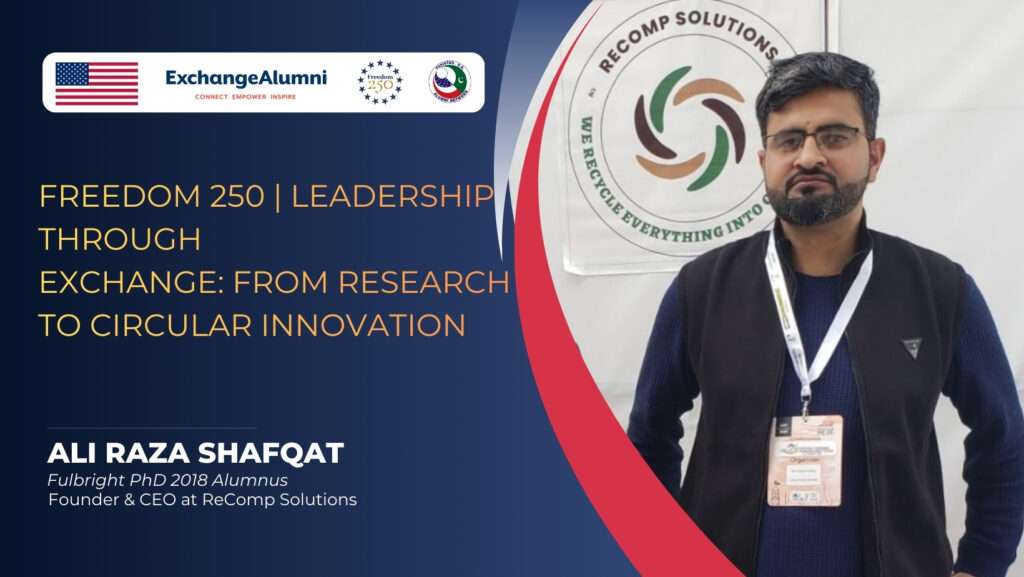
Ali Raza Shafqat is a Fulbright PhD alumnus (2018), a PhD scholar in Textile Engineering at the National Textile University, and the Founder and CEO of ReComp Solutions, a startup focused on converting textile and agricultural waste into high performance composite materials. While his academic training laid a strong technical foundation, his Fulbright experience in the United States marked a turning point in how he approaches research, innovation, and leadership.
During his time in the United States, Ali was exposed to advanced research environments, interdisciplinary academic culture, and innovation driven ecosystems. The Fulbright Program (2018) experience reshaped how he thinks about problem solving and leadership. He observed how U.S. universities and research institutions connect academia with industry, value cross disciplinary collaboration, and translate research into practical, market ready solutions. These lessons continue to guide his work in Pakistan.
Ali’s Fulbright journey strengthened his belief in evidence based decision making and the importance of building systems that last. It also deepened his understanding of sustainability as a driver of innovation. This perspective directly informed the creation and growth of ReComp Solutions, where he applies research driven approaches to address Pakistan’s growing textile and agricultural waste challenge.
Through his startup, Ali develops composite panels, boards, and interior solutions aligned with circular economy principles. His work demonstrates how innovation can support sustainable manufacturing, create green jobs, and contribute to economic resilience. The approach reflects not only technical expertise but also the values of responsibility and long term thinking shaped through his U.S. exchange experience.
Ali continues to maintain strong people to people connections with U.S. researchers, alumni networks, and professional communities. Alongside entrepreneurship, he remains active in academic collaboration through international conferences, editorial contributions to global book projects, and mentorship of young researchers and innovators. He actively encourages students and early career professionals to view U.S. exchange programs as platforms for lifelong collaboration, leadership development, and global engagement.
As the United States marks 250 years of leadership and innovation, Ali Raza Shafqat’s journey highlights the enduring value of U.S. Pakistan partnerships in education, research, and entrepreneurship. His story is a reminder that exchange programs continue to create impact long after participants return home. For emerging Pakistani changemakers, his message is clear: pursue U.S. exchange opportunities, build global networks, and apply shared knowledge to drive meaningful change where it matters most.