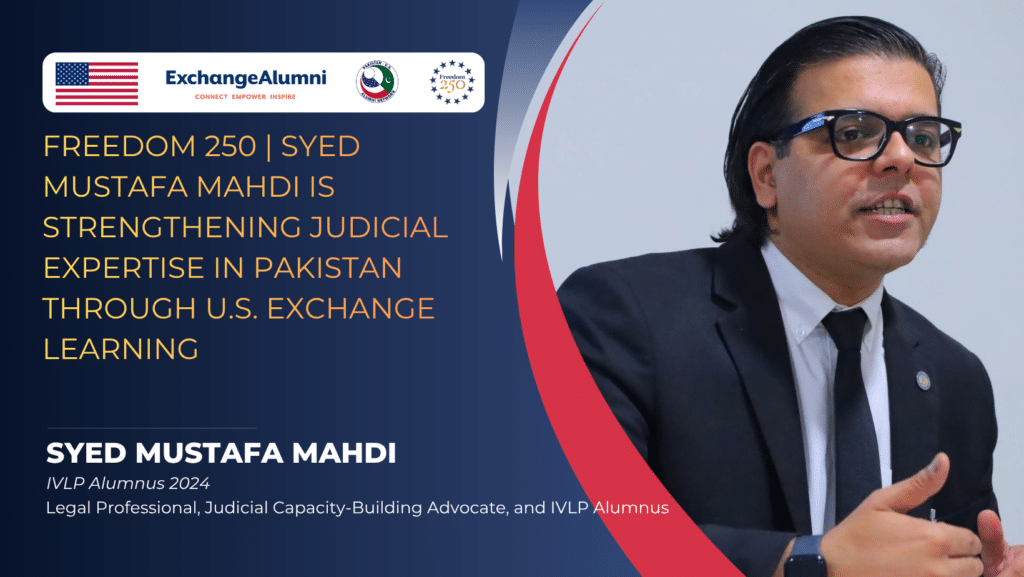
IVLP Alumnus Syed Mustafa Mahdi
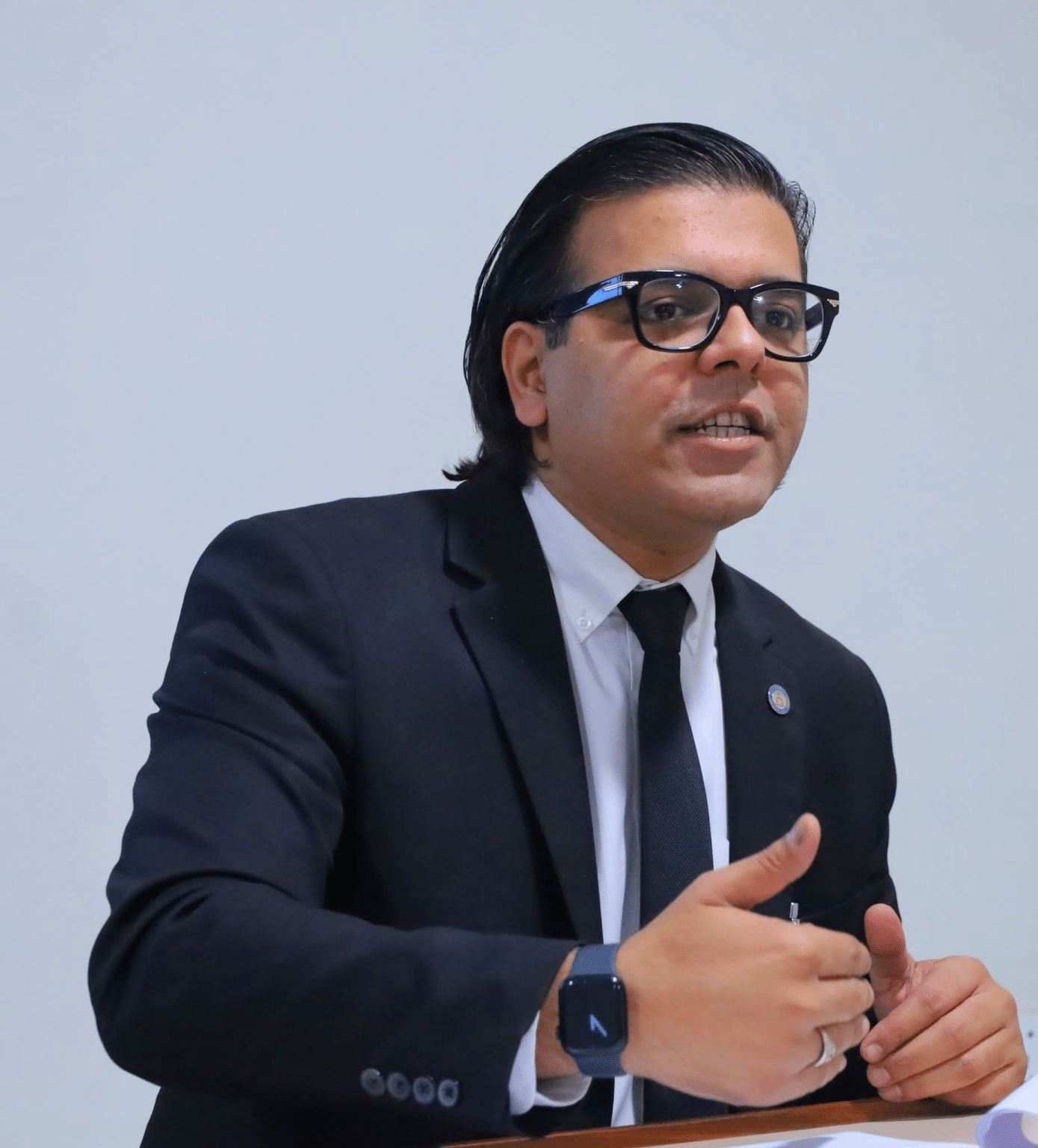
From representing clients in complex international legal disputes to training judges on international legal procedures, Syed Mustafa Mahdi is applying his professional expertise and U.S. exchange experience to strengthen judicial capacity in Pakistan. An alumnus of the U.S. Department of State’s International Visitor Leadership Program (IVLP) 2024, Mahdi is an advocate, arbitrator, and mediator whose work focuses on international law, dispute resolution, and cross-border legal cooperation.
His journey demonstrates how exposure to American legal institutions and professional practices can contribute to strengthening judicial understanding, improving legal processes, and advancing international cooperation.
Applying international legal standards in Pakistan
As an Advocate of the High Courts of Pakistan and an internationally engaged legal professional, Mahdi has worked on cases involving the Hague Convention on the Civil Aspects of International Child Abduction, an international treaty that establishes procedures for addressing the wrongful removal or retention of children across international borders.
Following Pakistan’s accession to the Convention in 2017, its implementation created new legal questions for courts and practitioners. Mahdi became involved in proceedings that contributed to developing Pakistani jurisprudence in this specialized area of international family law.
His legal work includes matters reported in the Sindh High Court judgments 2024 YLR 1330 and 2025 YLR 258, involving the application of the Convention in cross-border disputes. He continues to work on several related cases before courts across Pakistan, supporting the interpretation and application of international legal obligations.
Learning from American judicial expertise
In December 2024, Mahdi participated in a specialized IVLP exchange in the United States focused on the implementation of the Hague Convention.
The program provided opportunities to examine how American courts, law enforcement agencies, and other relevant institutions address international child abduction cases, particularly questions of jurisdiction, enforcement, and timely judicial proceedings.
Through interactions with U.S. legal professionals and institutions, he gained valuable perspectives on the practical application of the Convention and the importance of coordination among stakeholders.
The experience complemented his existing legal practice and strengthened his understanding of how international legal frameworks can be implemented effectively within different judicial systems.
Turning professional learning into institutional impact
One of the most significant aspects of Mahdi’s work has been sharing his legal expertise with members of Pakistan’s judiciary.
He has conducted training for two batches of 30 judges each in Sindh, reaching a total of 60 judicial officers. These sessions focused on the application of the Hague Convention, relevant international standards, and the importance of handling cross-border child abduction cases with appropriate urgency and legal understanding.
Drawing on his courtroom experience and exposure to U.S. judicial practices, Mahdi has contributed to professional discussions on jurisdiction, enforcement, and the interpretation of the Convention.
His work demonstrates how international professional exchanges can extend beyond individual development to support institutional learning and professional capacity building.
Building stronger judicial capacity for the future
Mahdi believes that continued judicial education is essential for strengthening the implementation of international legal obligations in Pakistan.
He advocates expanding specialized training to judges across all provinces, helping legal professionals develop a deeper understanding of the Convention and its emphasis on prompt judicial proceedings.
His broader vision is to encourage greater professional collaboration, knowledge sharing, and the application of international best practices within Pakistan’s legal system.
As the United States commemorates 250 years of independence, Mahdi’s journey highlights the lasting value of U.S.-supported professional exchanges in developing leadership, sharing American institutional expertise, and strengthening professional cooperation between Pakistan and the United States.
From international courtroom experience to judicial training in Pakistan, his work illustrates how knowledge gained through professional exchange can contribute to meaningful institutional outcomes.
His journey also encourages emerging Pakistani legal professionals to explore U.S. exchange opportunities, engage with American institutions, and apply international learning to strengthen their professions and contribute to Pakistan’s continued institutional development.