
ISLAMABAD: Young innovators showcased business ideas, prototypes, and enterprise models at the closing ceremony of the Community Innovation Lab: Youth Solutions for Local Challenges Inspired by U.S. Best Practices, a PUAN Grant Program project focused on strengthening entrepreneurship, innovation, business development, and workforce readiness among young people in Islamabad.
The project was implemented by Afsha Jehan, an English Works 2021–2022 alumna and member of the PUAN Islamabad Chapter, with fellow English Works alumnus Muhammad Ishfaq serving as project coordinator. The initiative was carried out under the PUAN Grants Program, funded by the U.S. Mission to Pakistan and administered in coordination with the Pakistan-U.S. Alumni Network (PUAN).
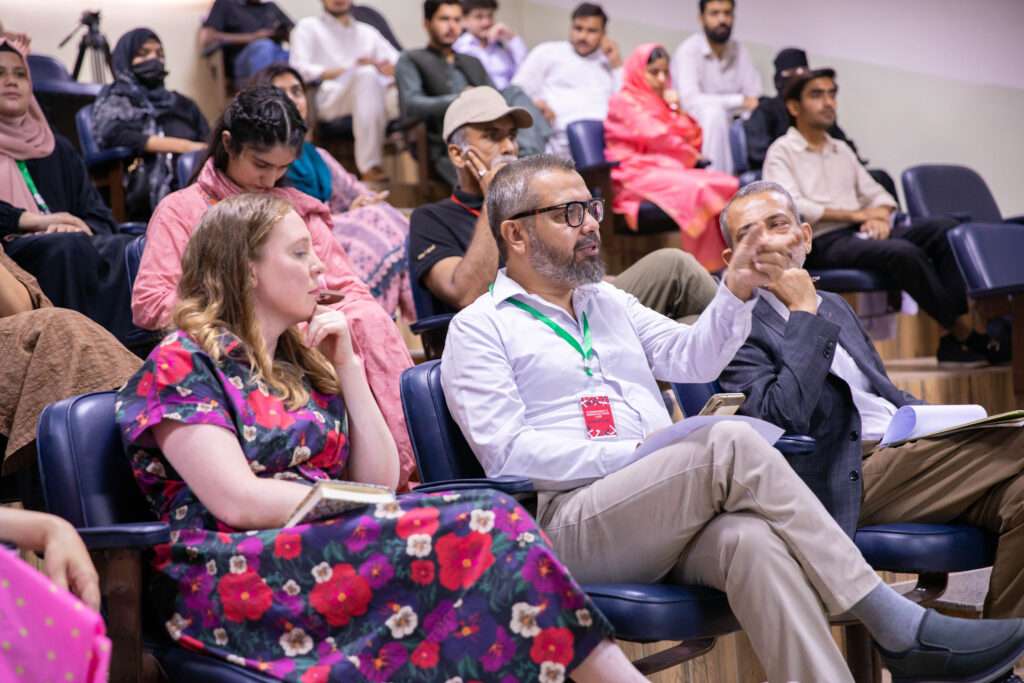
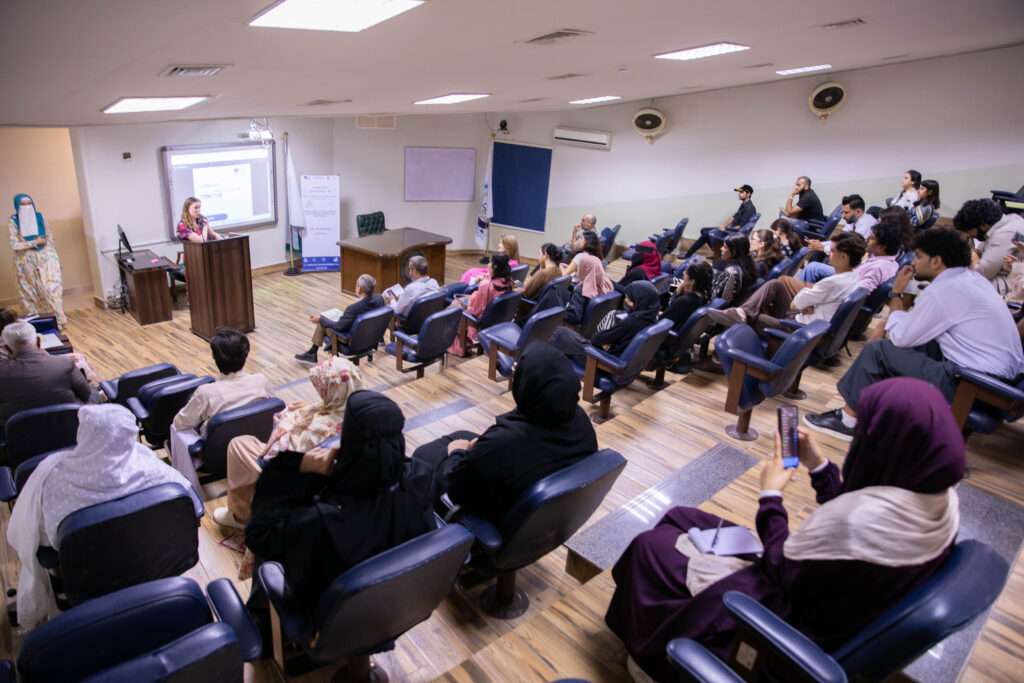
The closing ceremony at Bahria University Islamabad Campus brought together over 45 participants, including project participants, students and faculty members, PUAN alumni, mentors, entrepreneurs, and representatives of the U.S. Embassy Islamabad.
The U.S. Embassy delegation included Katie Smith, public diplomacy officer; Shahid Waseem, country alumni specialist; Saif Ullah, emerging voices specialist; Usman Khan, program coordinator; and Salman Wahab, alumni engagement coordinator.
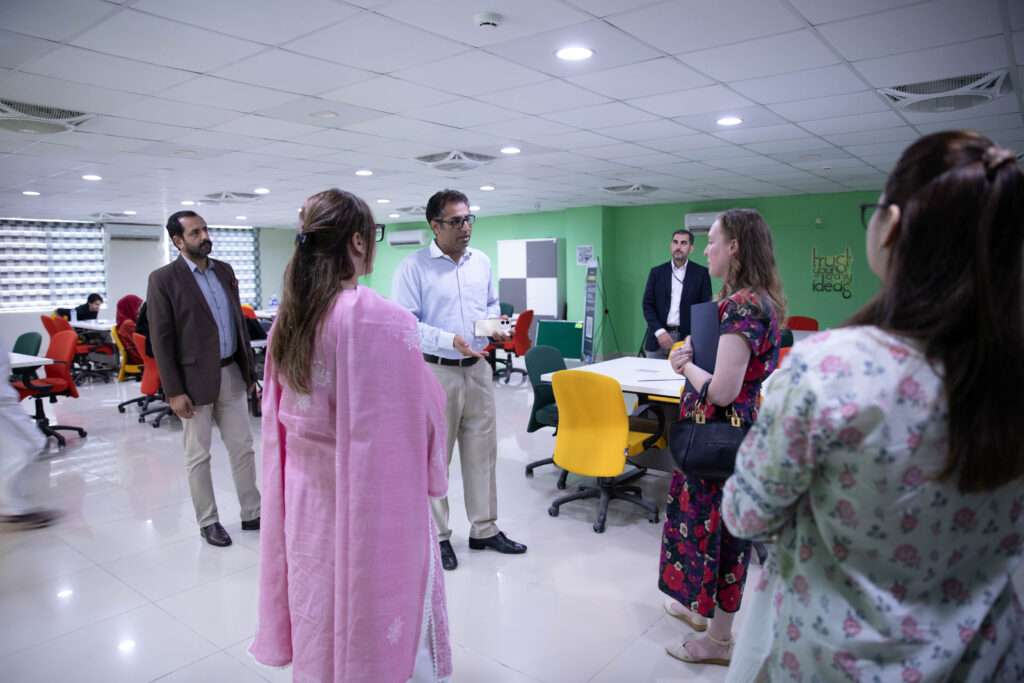
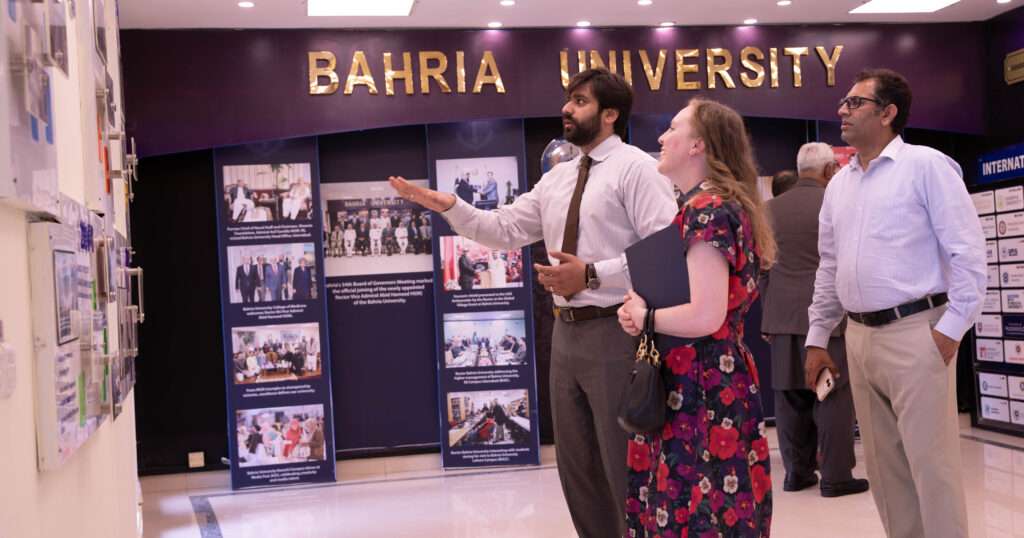
Before the ceremony, the U.S. Mission delegation visited the Bahria University Innovation Centre, where Dr. Majid, team lead at the Innovation Centre, led a tour of the facility and briefed the guests on its work supporting entrepreneurship, innovation, and student-led business development.
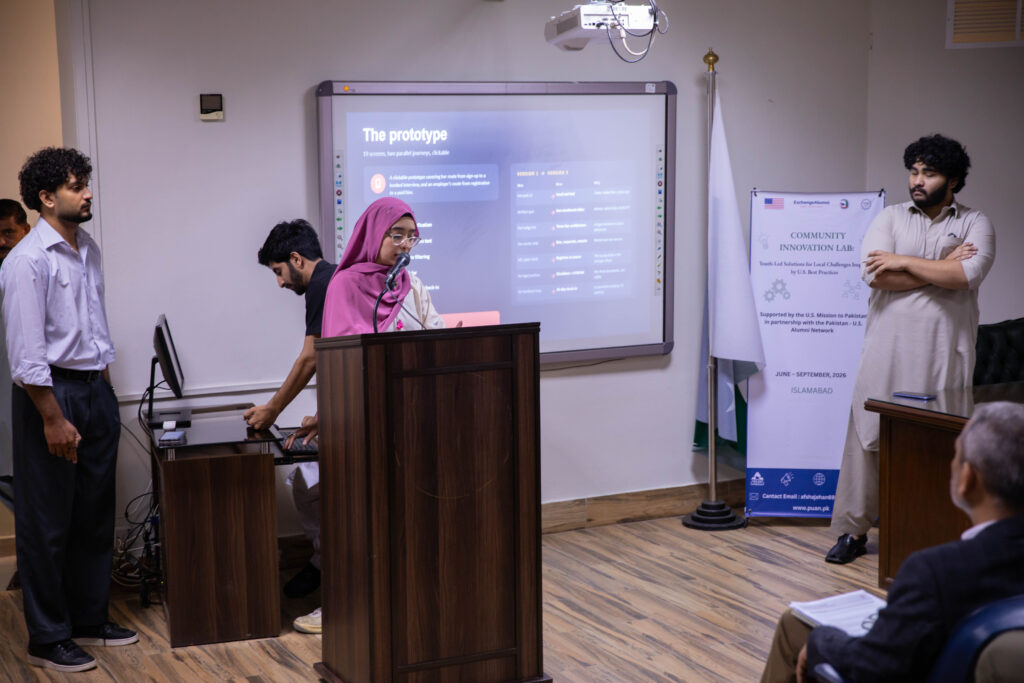
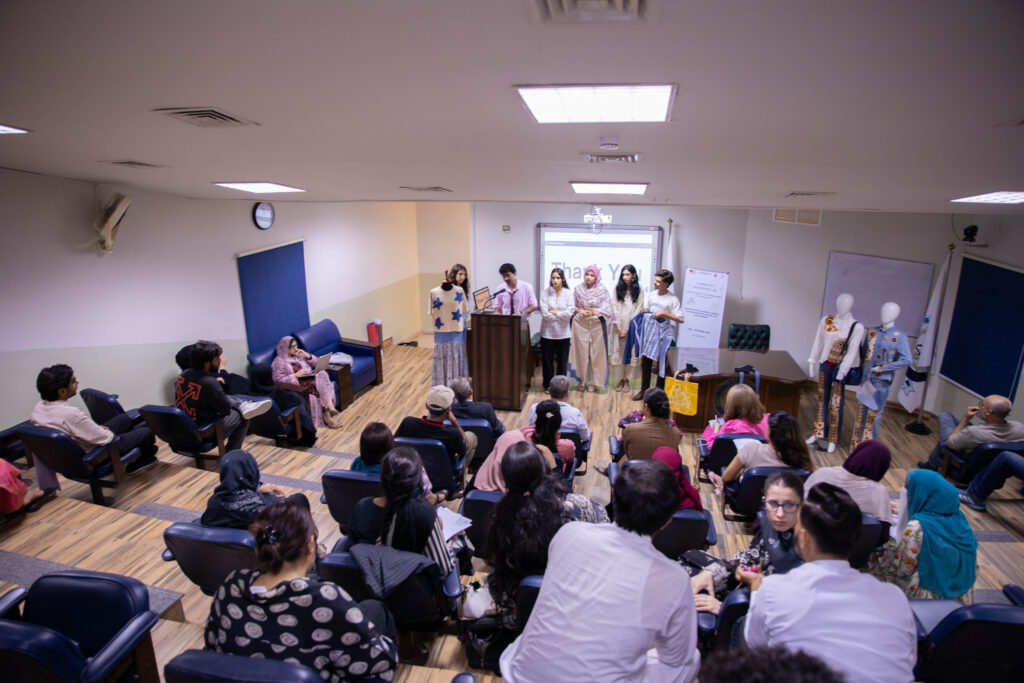
Following the formal opening, Project Coordinator Muhammad Ishfaq provided an overview of the Community Innovation Lab and the participants’ learning journey. The centerpiece of the ceremony was a Demo Day-style showcase featuring eight shortlisted teams, which presented business and innovation ideas developed and refined through workshops, mentorship, prototyping, and enterprise-development activities.
Each team presented the problem or market gap it sought to address, its proposed product or service, target customers, value proposition, business model, prototype, and prospects for growth. The pitches were followed by detailed question-and-answer sessions in which mentors challenged participants on customer demand, pricing, revenue generation, competitive advantage, market potential, scalability, and commercial viability.
Among the concepts presented was SkillBridge Pakistan, led by Momin bin Irfan, which seeks to address the gap between academic education and workplace requirements through a B2B2C model. The team had also developed a prototype website.
Reflecting on the experience, Momin said the mentorship process helped the team rethink and refine its approach to entrepreneurship, emphasizing that “a degree is not the finish line.”
Presentation Lead Leena Ali said the program gave participants the opportunity to build a professional network, learn from experienced mentors, connect with peers who share an interest in entrepreneurship and innovation, and build the confidence needed to pursue their ideas.
Another team presented Chhan, led by Faiz Mehmood and Taskeen, an enterprise concept that creates value-added fashion products by redesigning previously used clothing and materials into marketable items, including shirts, jackets, bottoms, and bags.
Faiz said the team’s ambition is to develop Chhan into a recognizable brand and eventually explore international markets, including the United States. Taskeen noted that while the original idea existed before the program, participation in the Community Innovation Lab helped the team refine its concept, strengthen its business model, and move closer to execution.
Dare n Dine Café, led by Raza Javed, presented an incentive-based enterprise model under the tagline “Bring Your Trash, Earn Your Cash.” Raza explained that the idea was at the ideation stage when the team joined the program, but through mentorship and business-development activities, the team was able to work on its prototype, refine its model, and attract initial interest from organizations.
Mentors also reflected positively on the progress participants made in developing their business concepts and entrepreneurial skills over the course of the program. Jamil Adil, an IVLP 2012 alumnus, said:
“Seeing students turn passion into purpose and ideas into action has been the most rewarding part of this journey.”
Other mentors encouraged participants to think beyond traditional employment pathways and explore how entrepreneurship, technology, and innovation can enable them to create new products, services, and business opportunities.
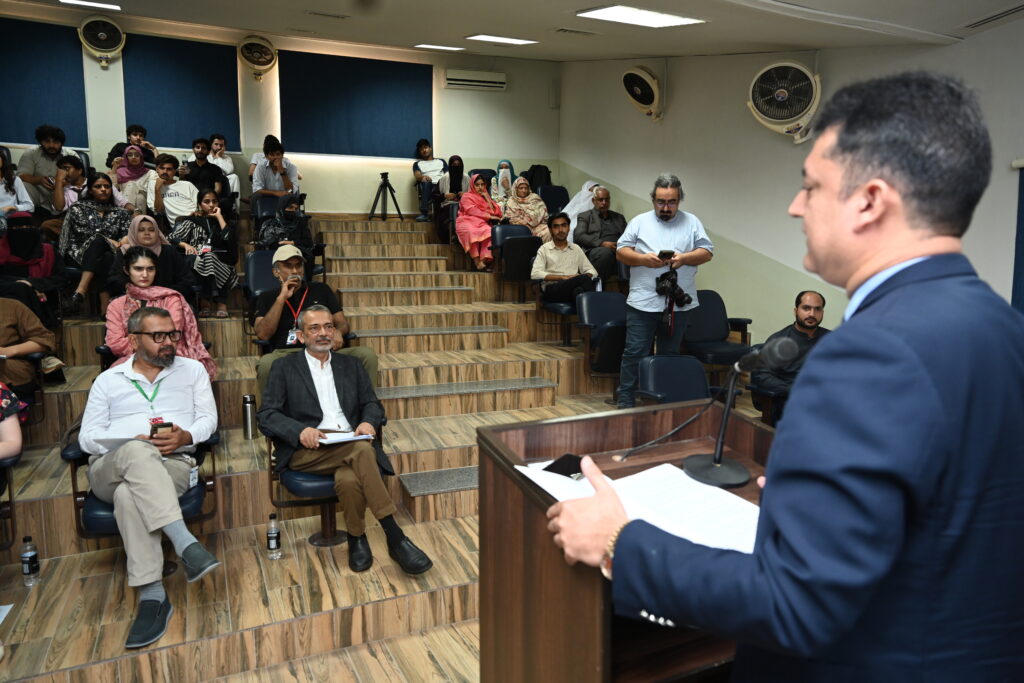
Delivering the vote of thanks, Dr. Farrukh Shahzad, dean, Faculty of Humanities and Social Sciences, Bahria University Islamabad Campus, commended the participants for “pushing the boundaries through these innovative ideas.”
Finding the “Why” Behind a Business
In her closing remarks, Katie Smith, public diplomacy officer, U.S. Embassy Islamabad, congratulated the participants for the creativity, effort, and persistence demonstrated through their projects. Drawing on an idea from leadership author Simon Sinek, Smith told participants, “People don’t buy what you do, they buy why you do it.”
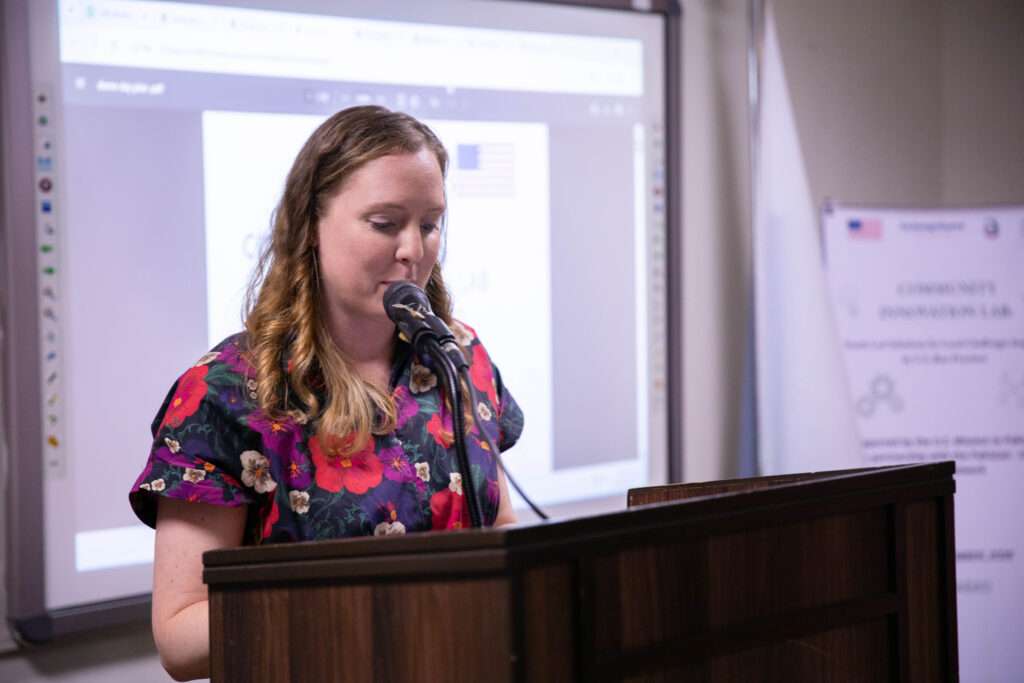
Using the example of two different pitches for the same coffee shop, she illustrated how entrepreneurs can communicate not only what they sell but also the purpose and value behind their business.
She encouraged participants to apply that thinking to their own ventures, asking: “What is your why? Why are you passionate about what you’re building? Why should other people care? Why should an investor care?”
Smith also shared another lesson she had heard from a U.S. angel investor: “Sell medicine, not vitamins.” She explained that entrepreneurs need to create a sense of urgency around their products by solving problems that customers have a clear reason to address.
She then drew on the story of the Wright brothers and Samuel Pierpont Langley to highlight motivation, persistence, and learning through setbacks. Smith encouraged participants to remain curious when things do not go according to plan and to treat the success of others as an opportunity to learn.
“The success of someone else is not a threat to you. It’s an invitation to get curious,” she said.
She further emphasized that when entrepreneurs believe in the problem they are trying to solve, “failure becomes something you can learn from rather than a reason to quit.”
Connecting these lessons with the United States’ 250th anniversary, Smith described the American story as one shaped by generations of “tinkering with ideas, failing, moving forward, collaborating.”
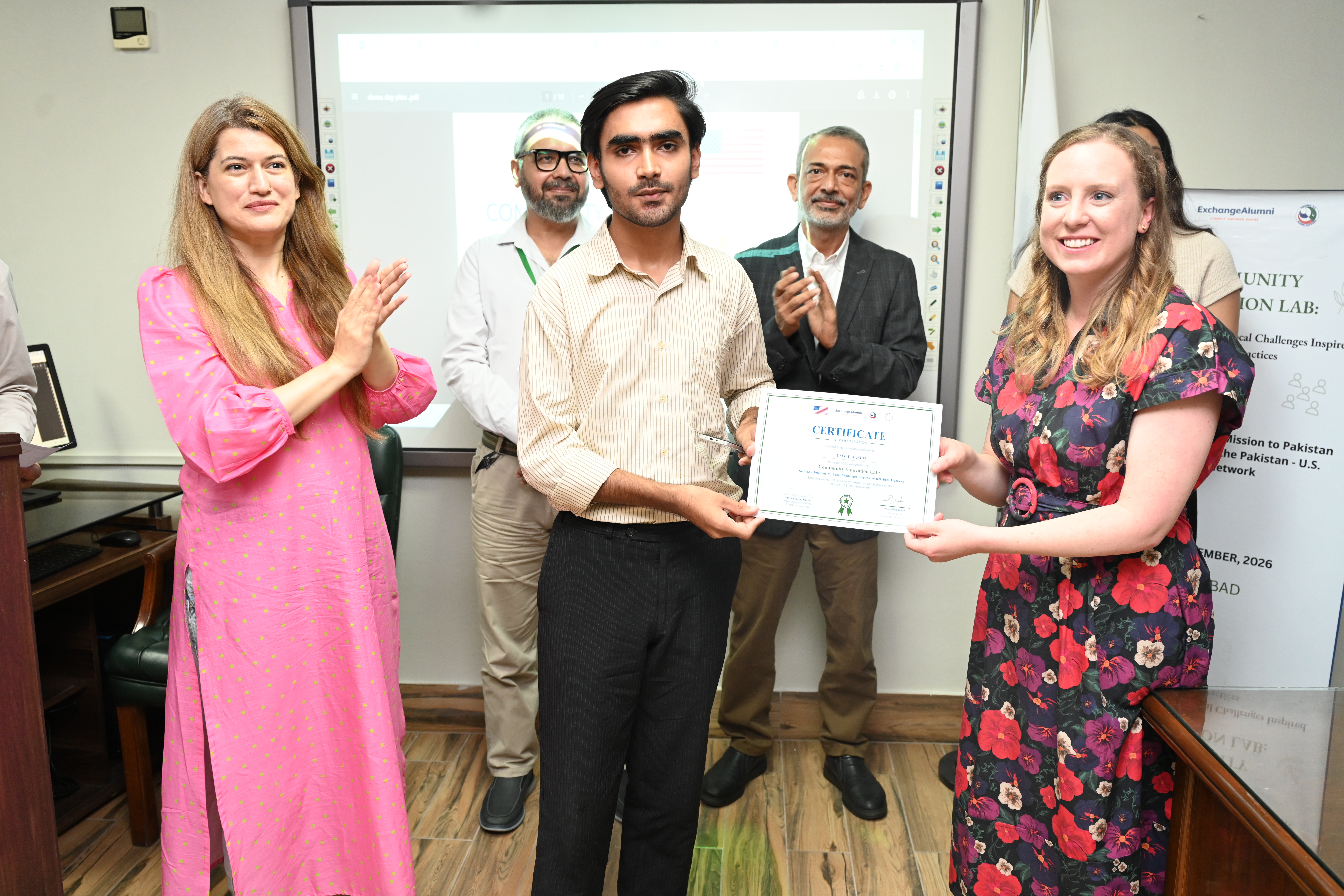
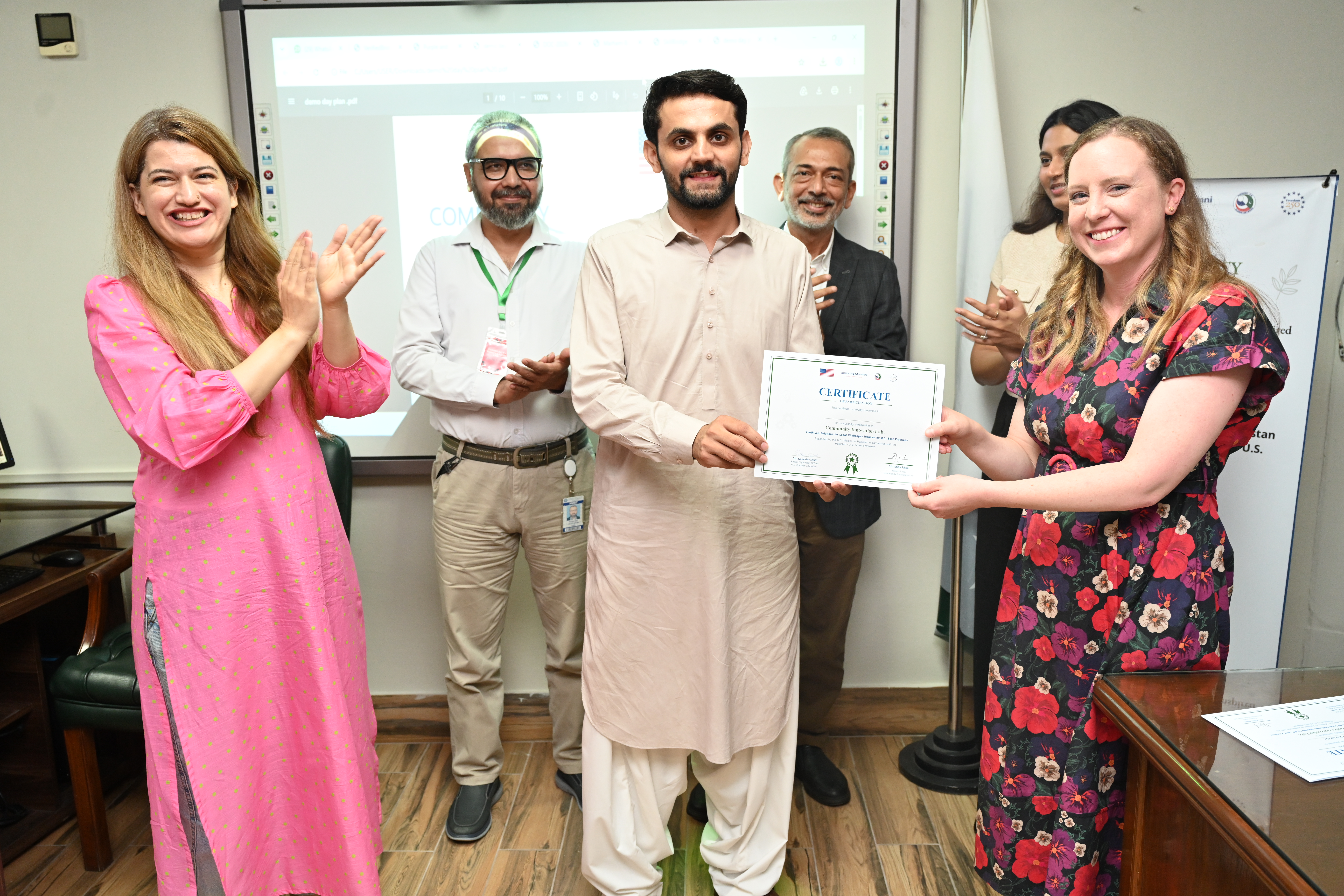
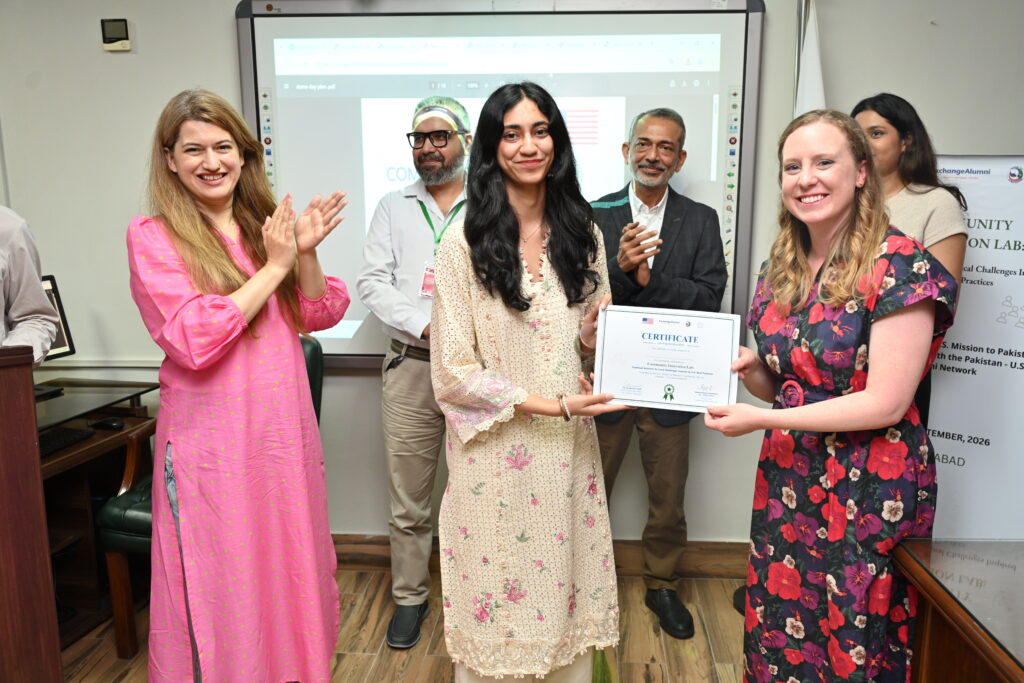
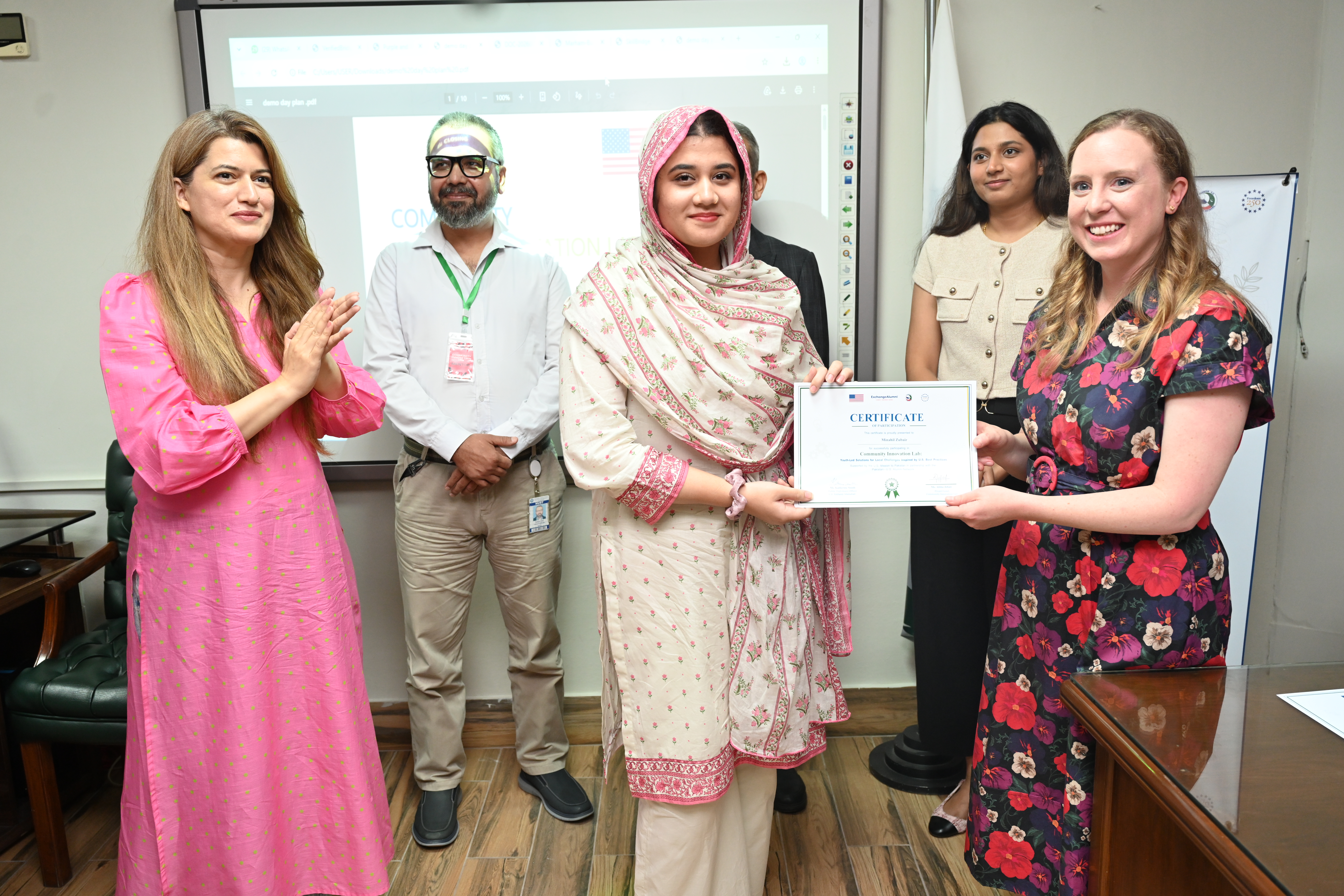
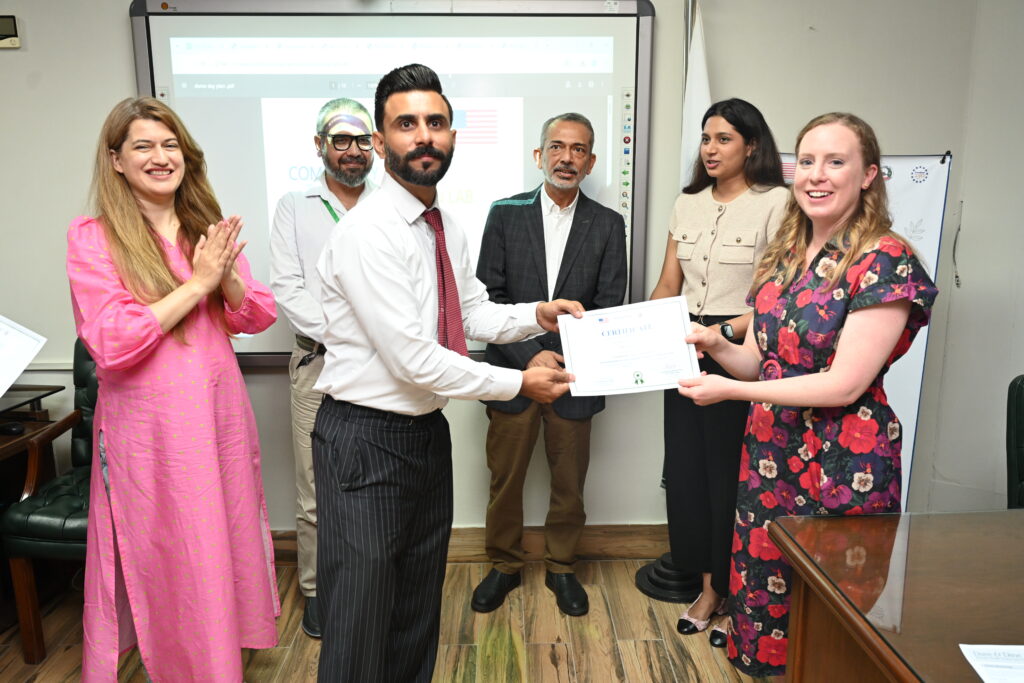
The ceremony concluded with the distribution of certificates to participants by Katie Smith.
The Community Innovation Lab demonstrated how an alumni-led PUAN Grant can help young people move from early-stage ideas toward structured enterprise concepts, prototypes, clearer value propositions, and market-oriented business models.
As the teams move forward, the next stage will be to test their assumptions in the market, connect with potential customers, identify potential business partners, strengthen revenue models, and explore opportunities to turn promising concepts into viable enterprises.