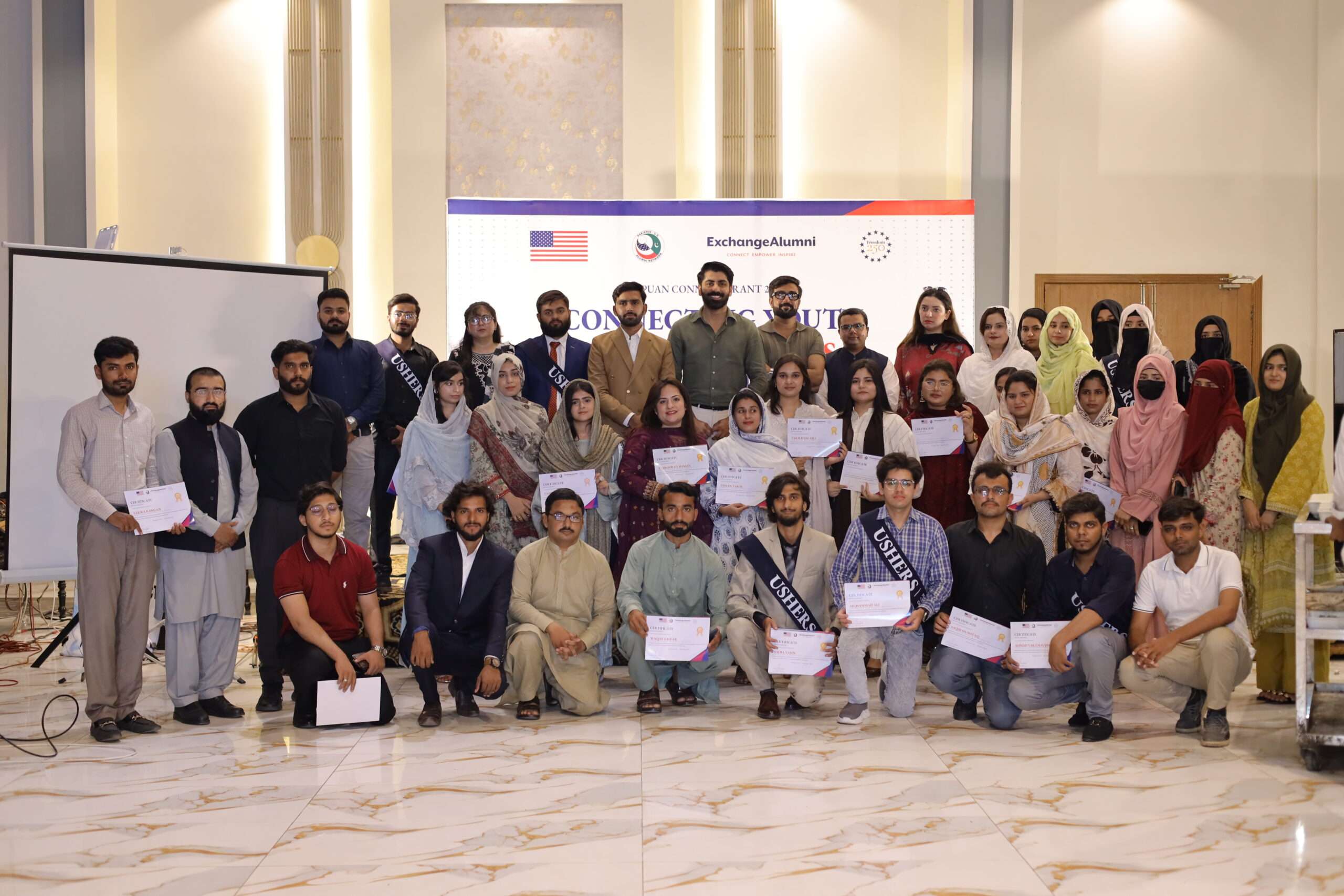
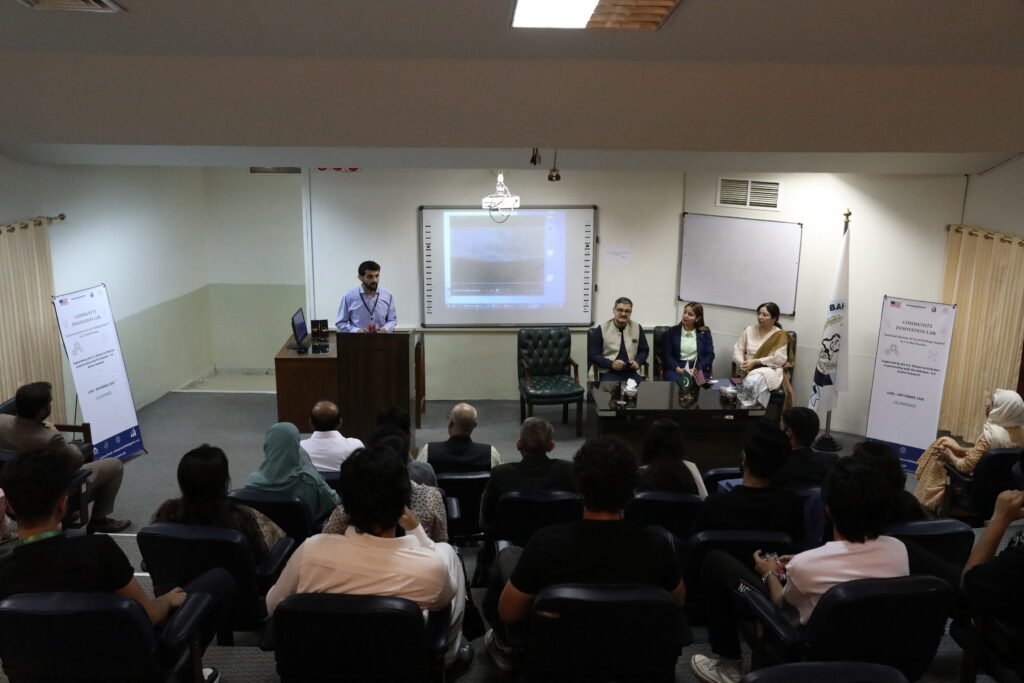
Islamabad | July 9, 2026: The Community Innovation Lab: Youth Solutions for Local Challenges Inspired by U.S. Best Practices officially launched at Bahria University Islamabad Campus, bringing together young innovators, educators, development practitioners, U.S. Mission representatives, and Pakistan-U.S. Alumni Network (PUAN) members to advance youth-led innovation, entrepreneurship, and workforce readiness.
The initiative is being implemented by Afsha Jehan, an English Works (2021–2022) alumna. The project is supported by the U.S. Mission to Pakistan in partnership with the Pakistan-U.S. Alumni Network (PUAN) under the Freedom 250 – Community-Based Innovation & U.S. Best Practices Grants Program. The Freedom 250 grants support alumni-led initiatives that apply knowledge and skills gained through U.S. Government-funded exchange programs to strengthen innovation, workforce development, and economic opportunity while advancing U.S.-Pakistan cooperation.
Designed as a 16-week, results-driven program, the Community Innovation Lab will equip 40 university students and young entrepreneurs, with practical skills in digital innovation, design thinking, entrepreneurship, and leadership. Through interactive workshops, mentorship, engagements with U.S.-based experts, and hands-on prototype development, participants will learn to transform local challenges into practical, scalable solutions using innovation methodologies widely practiced across leading American universities, startup ecosystems, and innovation labs.
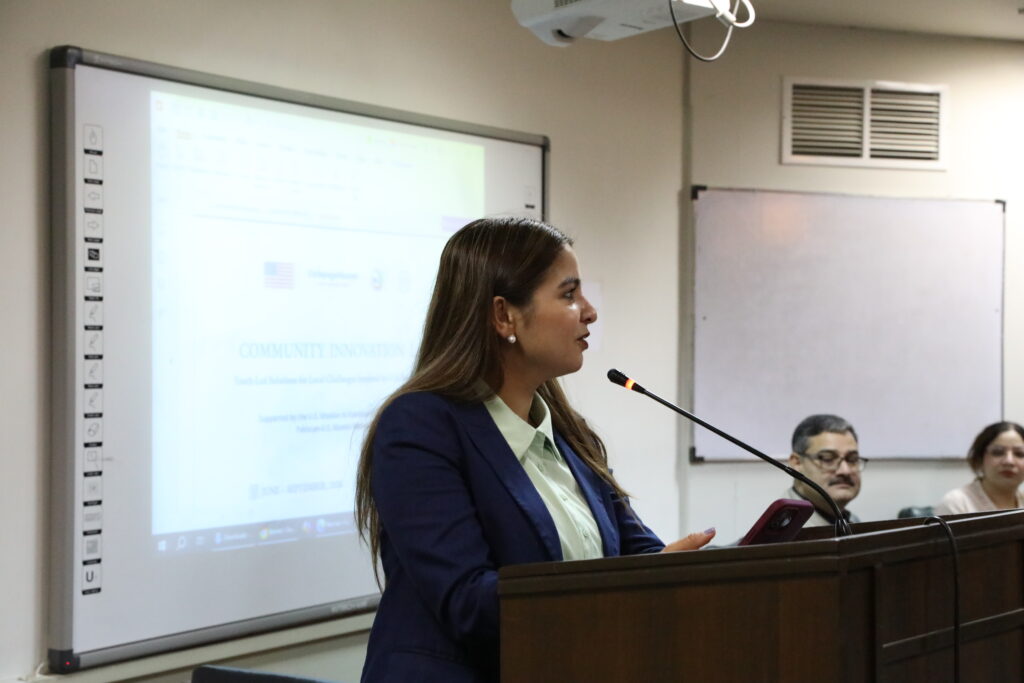
The opening ceremony featured Ms. Marta Aparicio, Public Diplomacy Officer – Alumni Programs Manager, U.S. Mission Islamabad, as the chief guest. Addressing participants, she highlighted the importance of empowering young people with the skills, leadership, and entrepreneurial mindset needed to thrive in an innovation-driven economy. She encouraged participants to leverage the knowledge and professional networks fostered through U.S. exchange programs to develop practical solutions that strengthen communities, expand economic opportunities, and contribute to a more innovative and prosperous future. Her participation reflected the U.S. Mission’s continued commitment to supporting alumni-led initiatives that showcase American excellence in innovation, entrepreneurship, and leadership while strengthening collaboration between the United States and Pakistan.
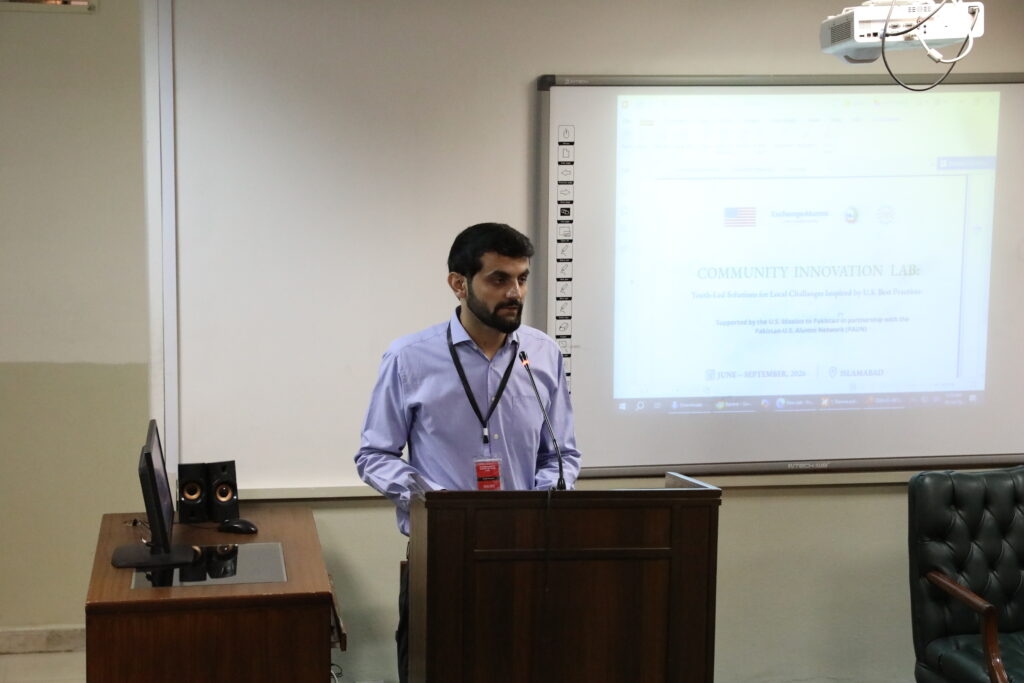
Welcoming participants, Muhammad Ishfaq, Project Coordinator and English Works (2021–2022) alumnus, introduced the vision and objectives of the Community Innovation Lab. He emphasized that the program is designed to help participants move beyond ideas by applying innovation, entrepreneurship, and problem-solving skills to develop solutions that address real community and economic challenges. Drawing on his experience leading national and international development initiatives, he encouraged participants to view innovation as a practical tool for creating sustainable local impact.
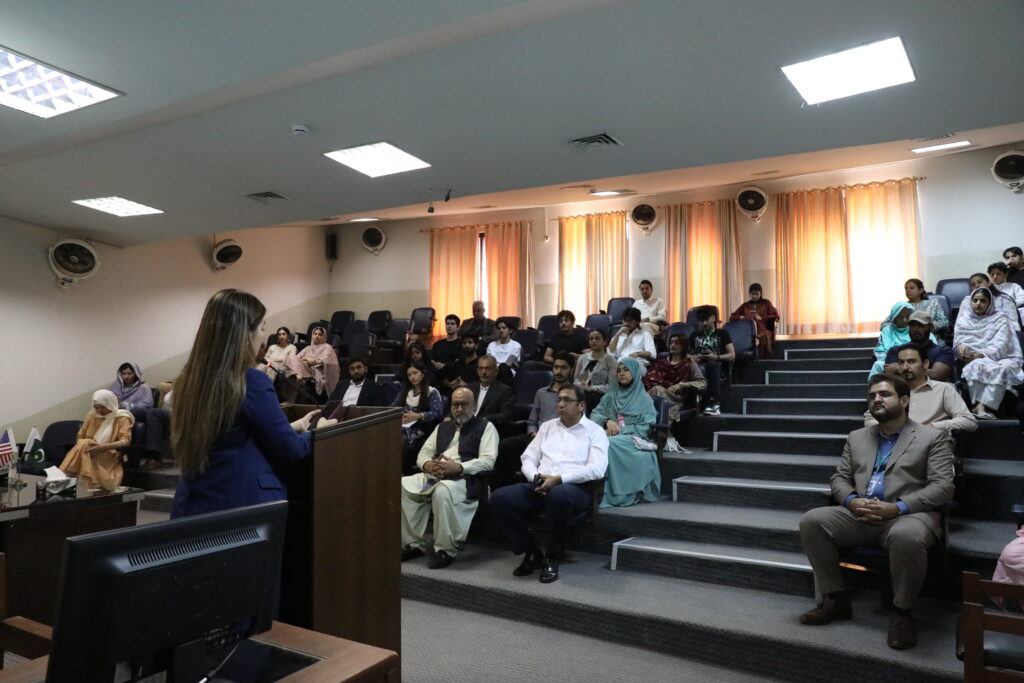
The event also brought together senior leadership from Bahria University Islamabad Campus, including Dr. Farrukh Shahzad, Dean of the Faculty of Social Sciences; Dr. Adam Saud, Principal of the School of Humanities and Social Sciences; Dr. Awais, Director of the Institute of Social Sciences; and Dr. Irfan Qaiserani, Head of the Department of Humanities and Social Sciences, reaffirming the university’s commitment to fostering innovation, entrepreneurship, and experiential learning among students.
A key strength of the initiative is the active engagement of PUAN alumni as mentors. During the orientation, participants attended interactive sessions led by Jamil Adil, an International Visitor Leadership Program (IVLP 2012) alumnus and seasoned development and public policy professional. Through sessions on the Community Innovation Lab Framework and U.S. Best Practices in Innovation and Entrepreneurship, he introduced participants to internationally recognized approaches such as design thinking, startup development, stakeholder engagement, and collaborative problem-solving, methodologies that have helped drive innovation across the American entrepreneurial ecosystem.
Participants also took part in a Community Challenge Mapping Workshop facilitated by Sania Haroon, an English language program alumna, where they identified pressing local challenges and explored opportunities to develop innovative, community-centered responses. The orientation concluded with a team formation exercise and assignment briefing, providing participants with a roadmap for the collaborative work ahead.
Over the next sixteen weeks, participants will complete more than twelve interactive workshops, receive mentorship from PUAN alumni and U.S.-based experts, conduct community research, and develop 8–10 innovation prototypes addressing challenges related to digital inclusion, entrepreneurship, employment, and local economic development. Selected projects will be piloted in real community settings before being presented at the program’s Demo Day and Youth Innovation Fair, where participants will showcase their solutions to educators, private sector leaders, community organizations, and development stakeholders.
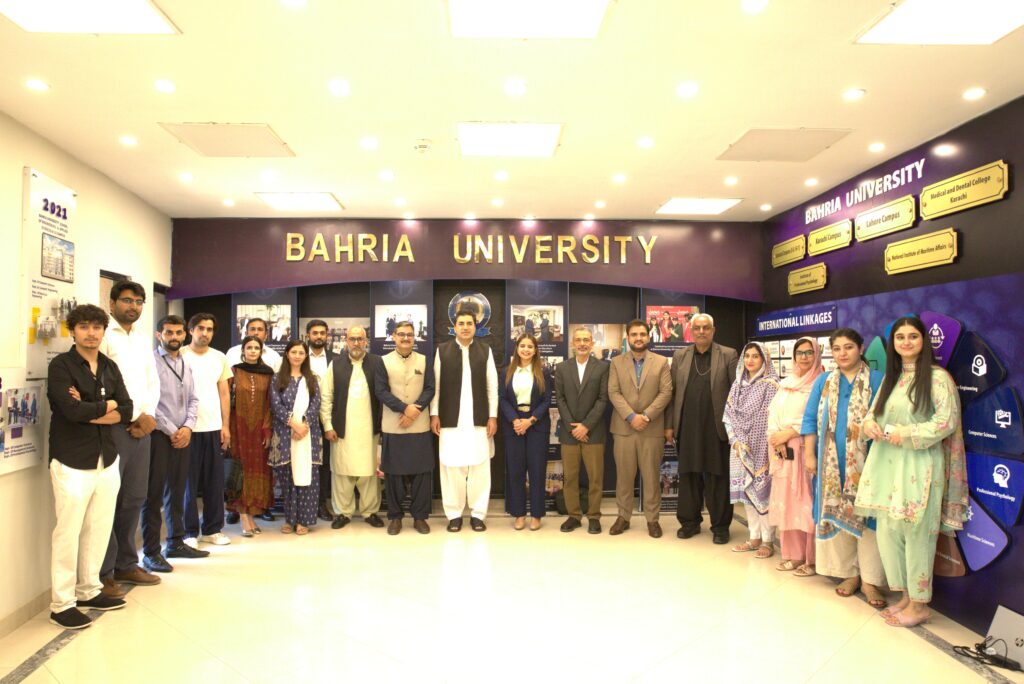
As part of the Freedom 250 initiative commemorating the 250th anniversary of the United States, the Community Innovation Lab demonstrates how American approaches to innovation, entrepreneurship, and problem-solving can be effectively adapted to address local priorities. By connecting U.S. exchange alumni, academic institutions, and emerging young leaders, the initiative showcases the enduring value of U.S. Government exchange programs in promoting innovation, workforce readiness, entrepreneurship, and sustainable economic growth while supporting stronger U.S.-Pakistan collaboration.