GILGIT, Pakistan — As artificial intelligence transforms industries worldwide, practical AI skills are becoming essential for workforce competitiveness, entrepreneurship, and participation in the global digital economy. Recognizing this opportunity, the Pakistan-U.S. Alumni Network (PUAN), with support from the U.S. Mission to Pakistan, is investing in workforce readiness through an innovative grant that is helping young professionals in Gilgit-Baltistan integrate artificial intelligence into real-world professional workflows.
The initiative, “Build AI Skills for Tomorrow, Today – Integrating AI & GenAI into Workflows for Coders, Designers & UX/UI Professionals,” is being implemented by Professional Fellows Program (2015) alumnus and PUAN Gilgit Chapter member Shaan Khan through SDA Technology Hub, Danyore. The four-month project is designed to equip more than 100 youth, freelancers, professionals, entrepreneurs, and students with practical AI and Generative AI skills that enhance productivity, improve employability, and create new opportunities in technology-driven industries.
Gilgit-Baltistan possesses one of Pakistan’s highest literacy rates, yet many talented young people continue to face limited employment opportunities and rely on traditional workflows that are rapidly being replaced by AI-enabled systems. The project addresses this challenge by introducing participants to globally relevant AI tools and teaching them how to integrate these technologies directly into design, business, accounting, and digital product development.
Rather than teaching artificial intelligence as a theoretical subject, every training session begins with an authentic workplace challenge before demonstrating how AI tools can accelerate productivity, improve quality, and support better decision-making. Through project-based learning, mentorship, and portfolio development, participants gain hands-on experience using leading platforms such as ChatGPT, Claude, Gemini, Perplexity, Figma AI, Google Stitch, Lovable, Canva AI, QuickBooks Online, and Xero AI.
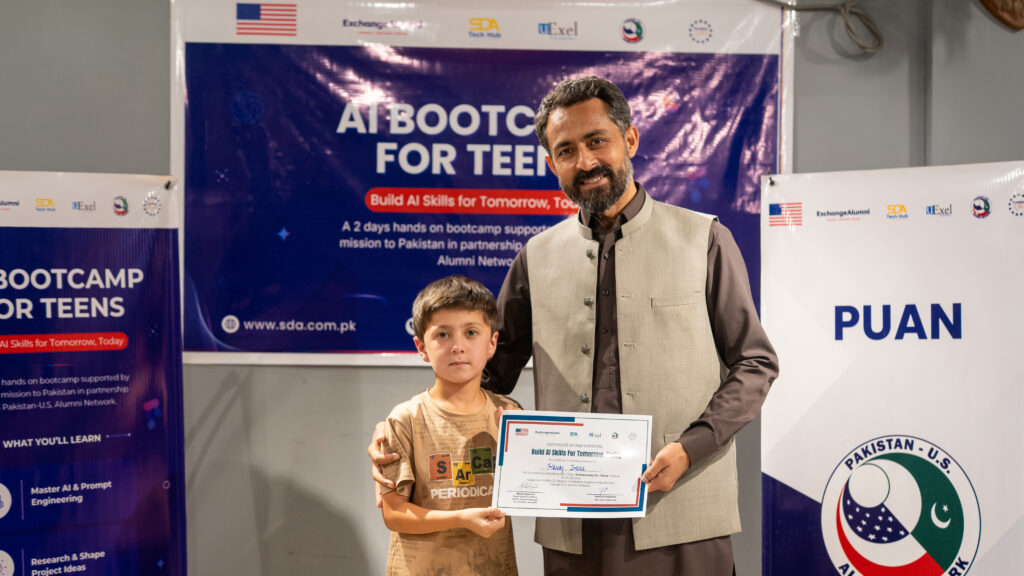
The initiative consists of four complementary components: an AI-Powered UI/UX Design Track, an AI for Accounting & Business Operations Track, Teen AI Bootcamps, and specialized AI application sessions focused on practical industry use cases. Together, these learning pathways prepare participants to compete for remote employment, freelance contracts, technology careers, and entrepreneurial opportunities in an increasingly AI-enabled global marketplace.
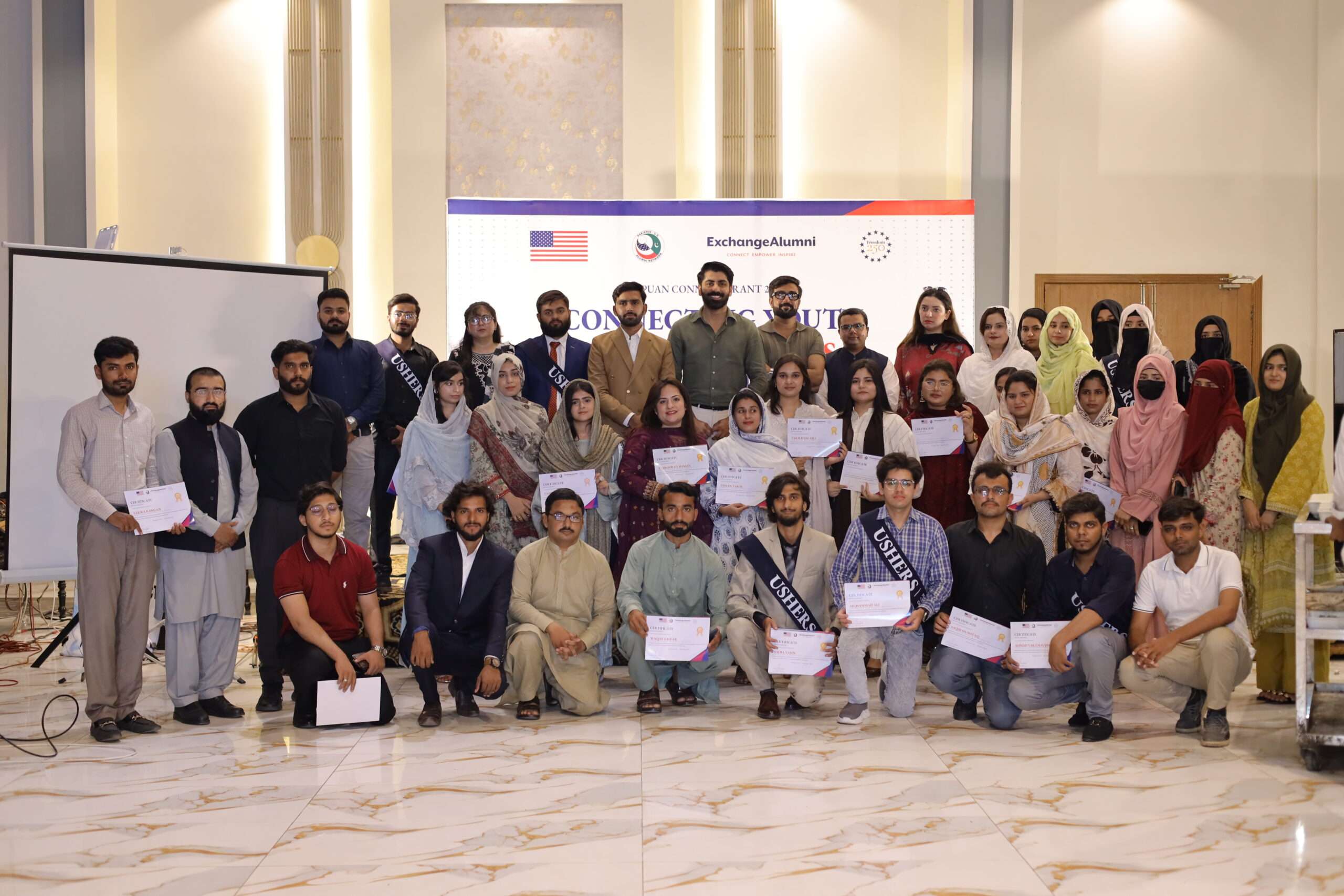
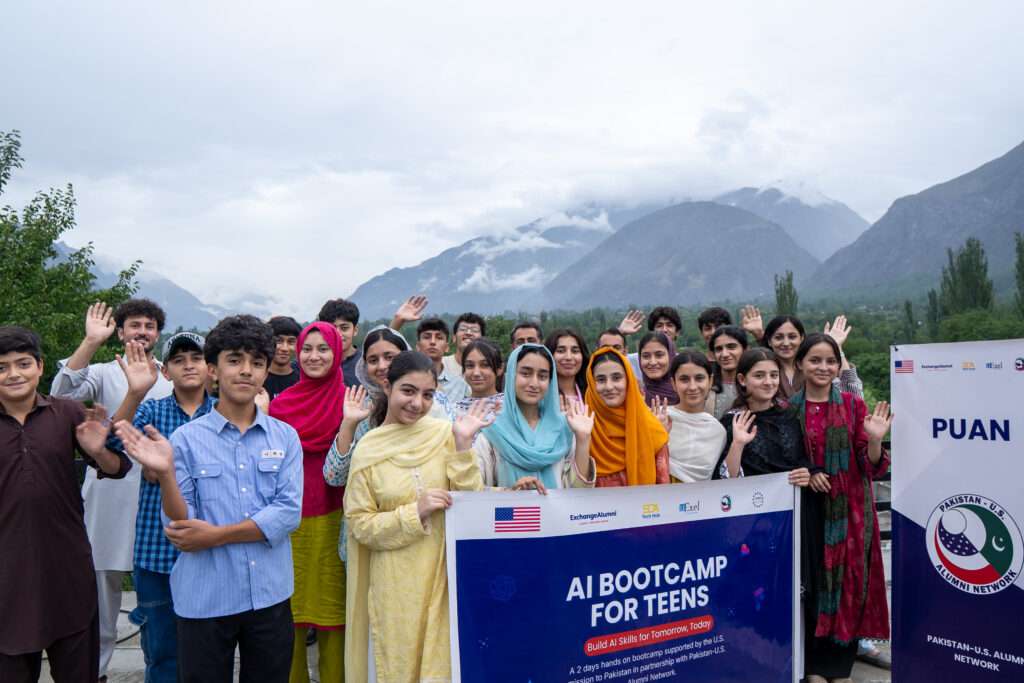
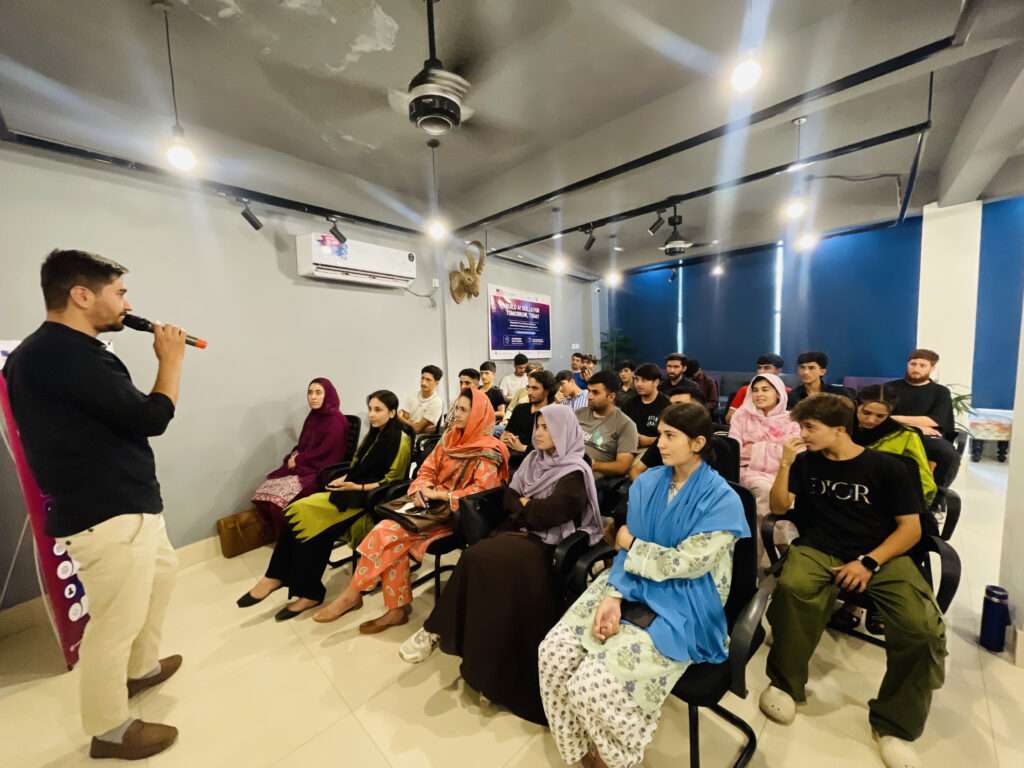
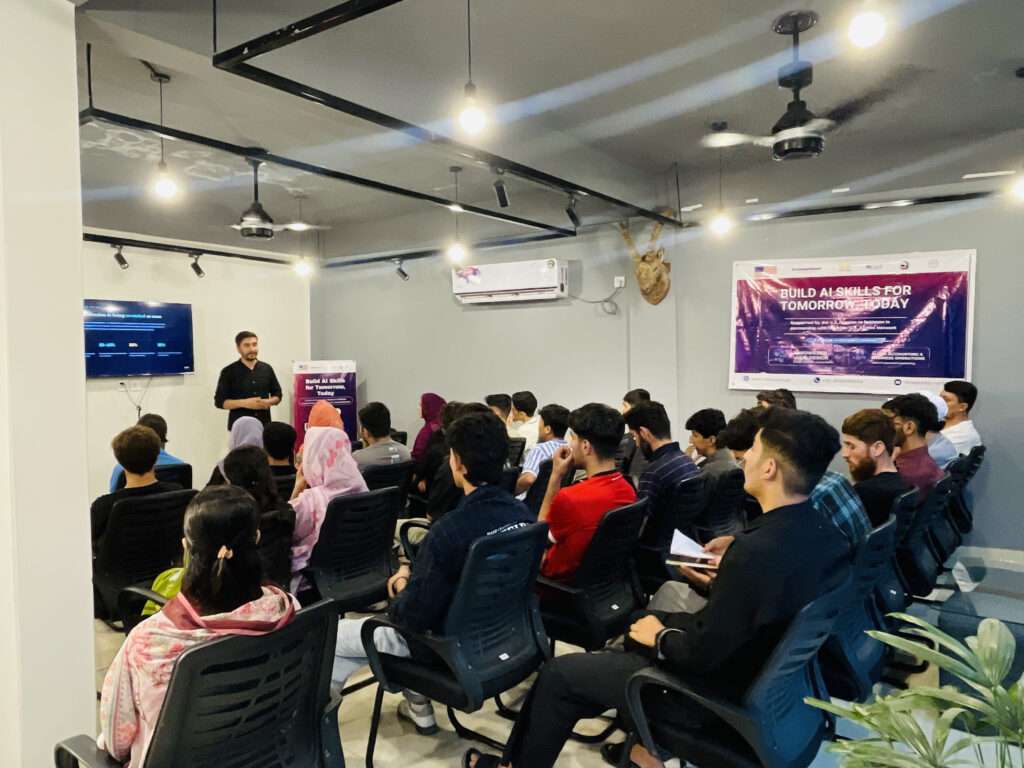
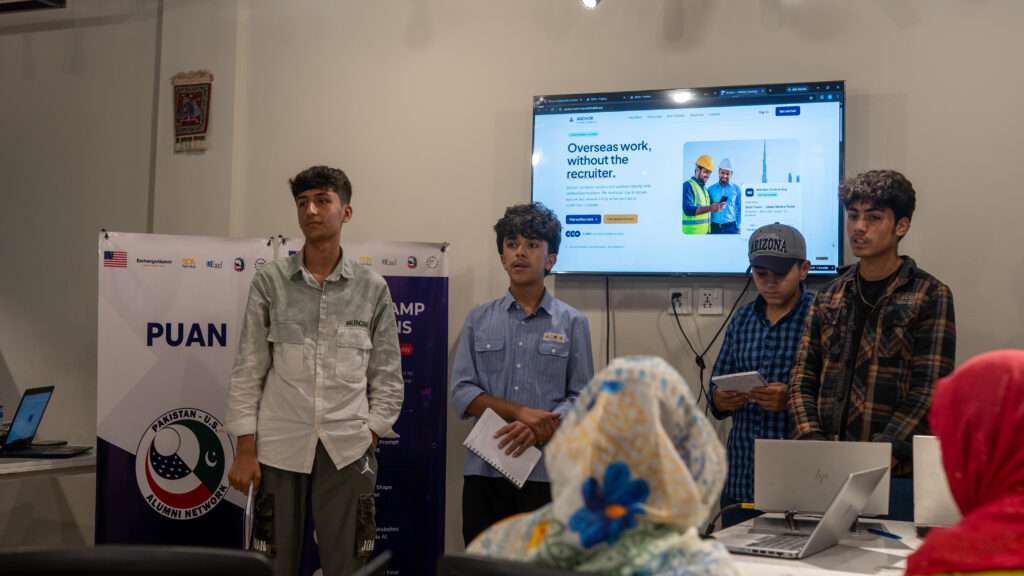
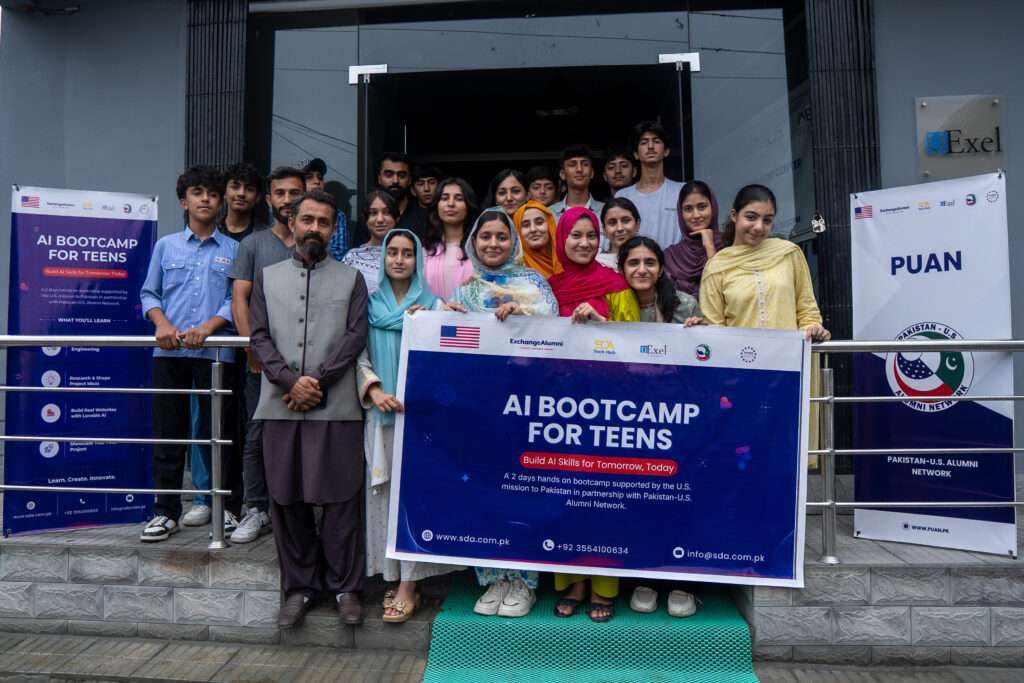
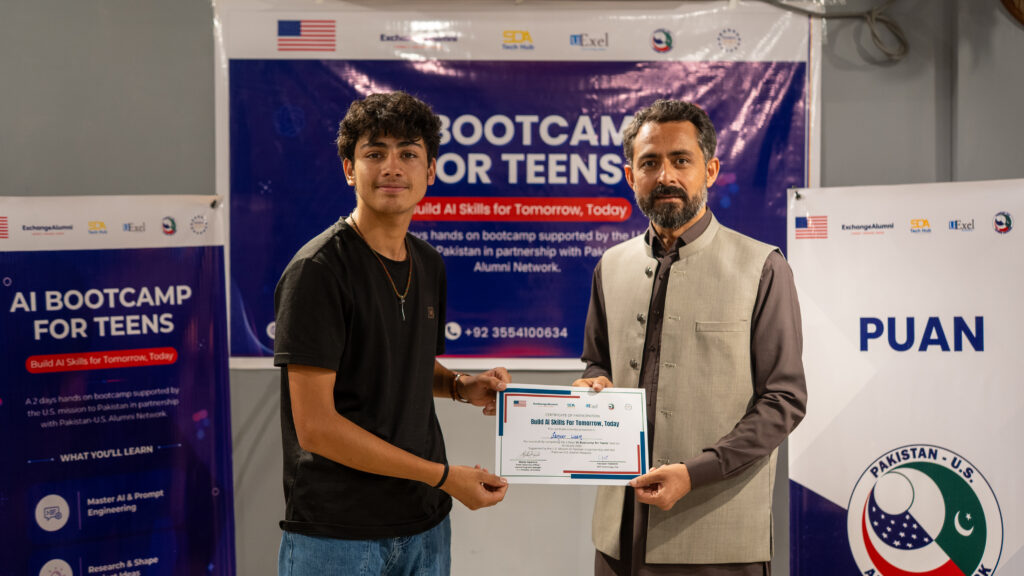
One of the project’s earliest milestones was the successful completion of its inaugural AI Bootcamp for Teens, which brought together 25 students between the ages of 13 and 18 from across Gilgit-Baltistan through a merit-based selection process.
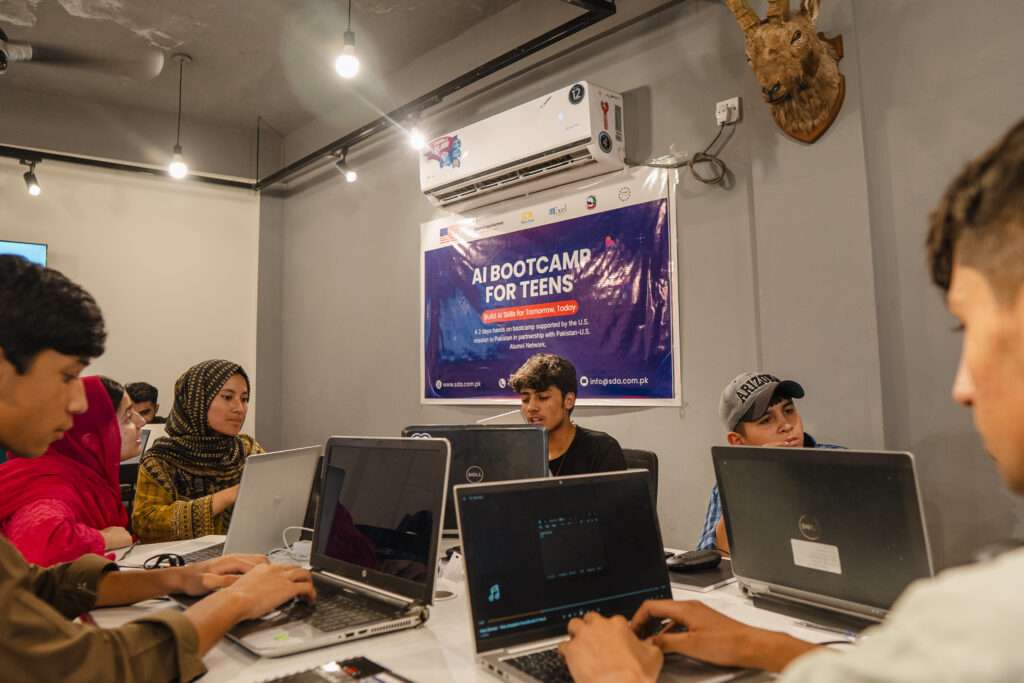
Over two intensive days, participants explored AI fundamentals, responsible AI use, and prompt engineering before applying their knowledge during a hands-on “Build with AI” hackathon. The outcomes highlighted both the enthusiasm and potential of young innovators across the region.
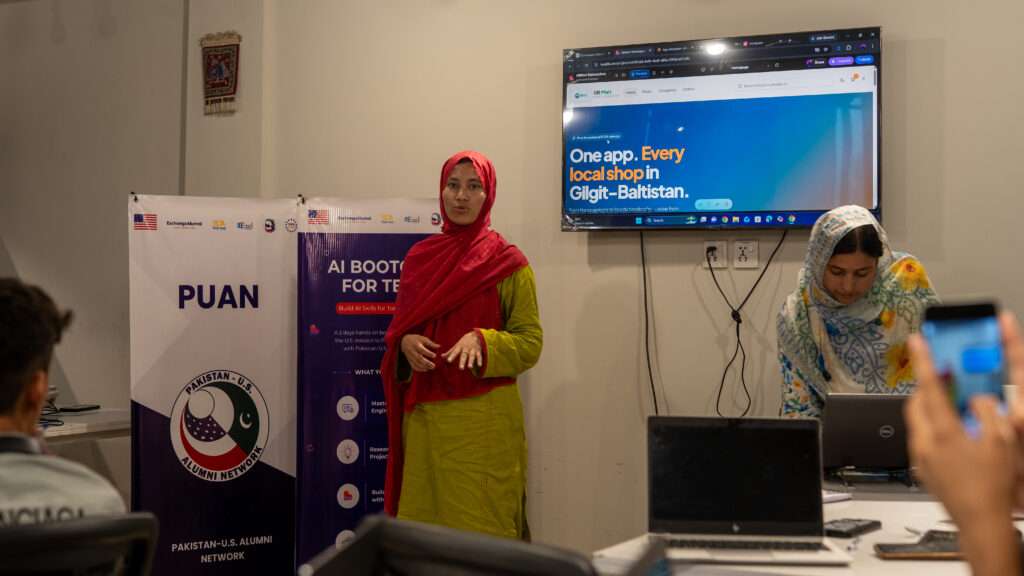
By the conclusion of the bootcamp, participants had developed 14 functional digital solutions, with 12 projects already deployed online.
The projects reflected a strong focus on solving local challenges through technology. Participants created platforms such as GBMart, a marketplace connecting local businesses with customers; Anchor, a verified employment platform for construction workers; NorthTrails, a digital guide promoting tourism across Gilgit-Baltistan; GB Languages, supporting the preservation of indigenous languages; EnergyWise, raising awareness of regional energy challenges; and several community-focused applications addressing environmental sustainability and local development.
The bootcamp also demonstrated encouraging participation by young women, who led several individual and team-based projects. Strong interest from applicants across Gilgit-Baltistan resulted in demand exceeding available seats, prompting organizers to schedule a second Teen AI Bootcamp to accommodate additional participants from the waiting list.
Alongside the youth program, the project’s flagship professional courses continue to train 50 selected participants through two intensive three-month tracks delivered five days a week.
The AI for Accounting & Business Operations track introduces participants to AI-powered financial tools that streamline bookkeeping, reporting, budgeting, forecasting, and business analysis, enabling professionals to transition from routine administrative work to higher-value strategic decision-making.
Meanwhile, the AI-Powered UI/UX Design track enables designers and digital professionals to transform client concepts into wireframes, prototypes, user interfaces, and production-ready digital products using AI-assisted design platforms. By integrating AI into every stage of the creative process, participants learn how to deliver higher-quality work in significantly less time while meeting the expectations of modern technology companies and international clients.
A defining feature of the initiative is its emphasis on measurable outcomes. Participants benchmark their performance before and after adopting AI tools, allowing them to quantify improvements in productivity, workflow efficiency, and quality of work. The project aims to demonstrate how AI can help professionals complete complex tasks faster while strengthening their competitiveness in domestic and international markets.
Beyond technical instruction, the initiative incorporates structured mentorship, portfolio development, and engagement with technology companies, design studios, accounting firms, and industry leaders. These partnerships help ensure that the training remains aligned with evolving employer needs while creating stronger pathways to internships, employment, freelance work, and business growth.
The project also reflects a long-term vision for sustainable workforce development in Gilgit-Baltistan. By strengthening SDA Technology Hub as a regional center for AI learning, cultivating an active network of alumni mentors, and establishing partnerships with educational institutions and private-sector organizations, the initiative is creating systems that will continue expanding access to AI education beyond the duration of the grant.
Through his leadership, Shaan Khan is applying the knowledge and professional experience gained through the U.S. Department of State’s Professional Fellows Program to help prepare Gilgit-Baltistan’s workforce for emerging opportunities in the digital economy. By equipping young people and professionals with practical AI capabilities, the project demonstrates how U.S. exchange alumni continue to contribute to Pakistan’s technological advancement, workforce competitiveness, and innovation-driven economic growth.
The project is funded through the PUAN Grants Program, an initiative supported by the U.S. Mission to Pakistan that empowers U.S. exchange alumni to design and implement high-impact community projects addressing workforce readiness, entrepreneurship, technology, education, and economic development across Pakistan.