Gilgit, July 12, 2026: As Pakistan’s economy continues to evolve through technology, entrepreneurship, and global trade, equipping young people with the professional skills needed to succeed has become more important than ever. To help prepare the next generation of leaders, the Pakistan-U.S. Alumni Network (PUAN), with the support of the U.S. Mission to Pakistan, launched “NextGen GB: Soft Skills for Youth Workforce Readiness,” a youth-focused initiative led by Dr. Aftab Ahmed Khan, a Fulbright Scholar (2021–2022) and Director of the School of Professional Development and Continuing Education (SPDCE) at Karakoram International University (KIU), Gilgit.
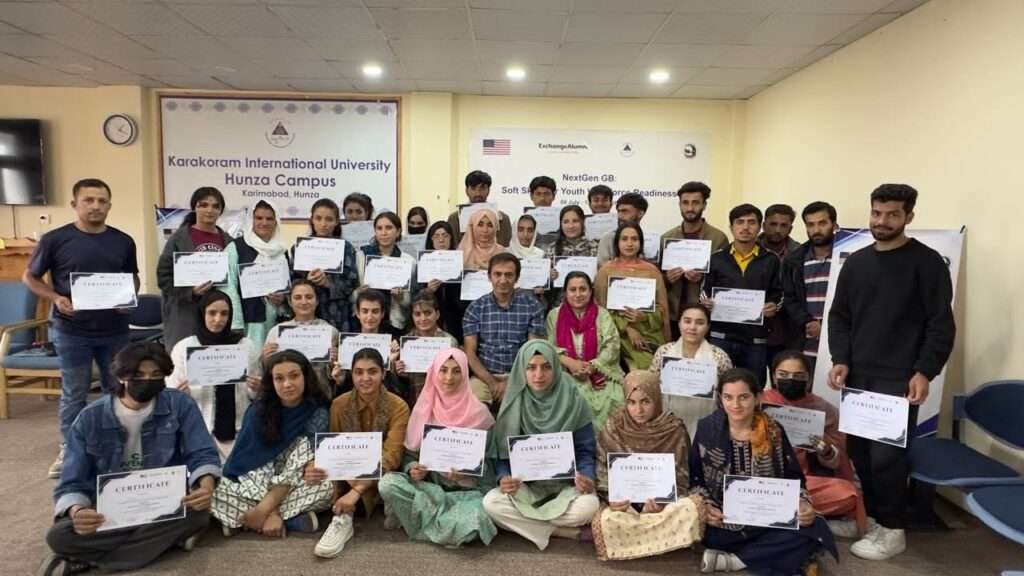
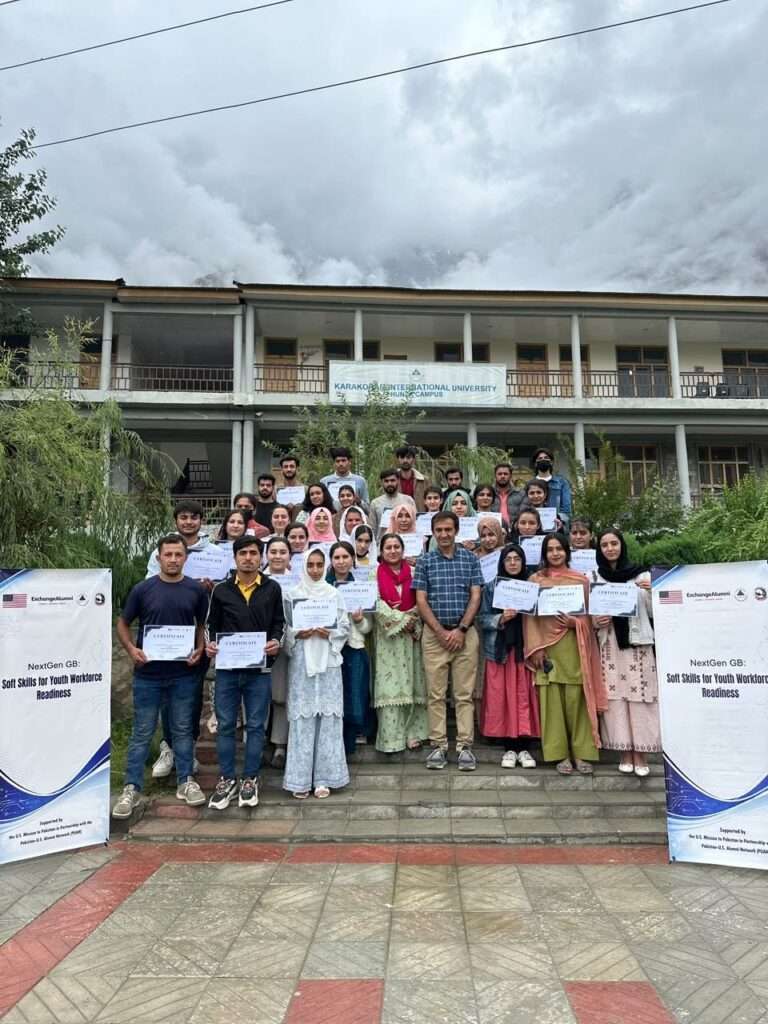
Held from July 8–12, 2026 at Karakoram International University (KIU) Hunza Campus, the five-day interactive workshop is part of the PUAN Grants Program 2026 under the theme “Workforce Readiness for Trade, Technology & Investment.” The initiative aims to strengthen the employability of young people in Gilgit-Baltistan by developing the soft skills and workplace competencies increasingly sought by employers and entrepreneurs.
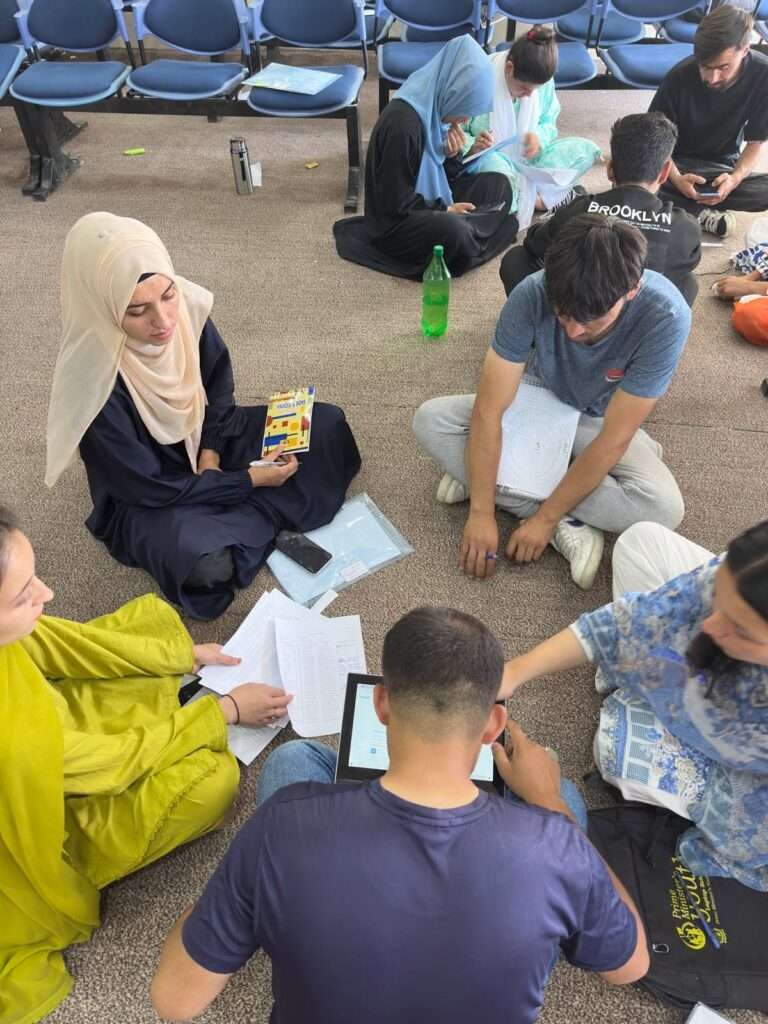
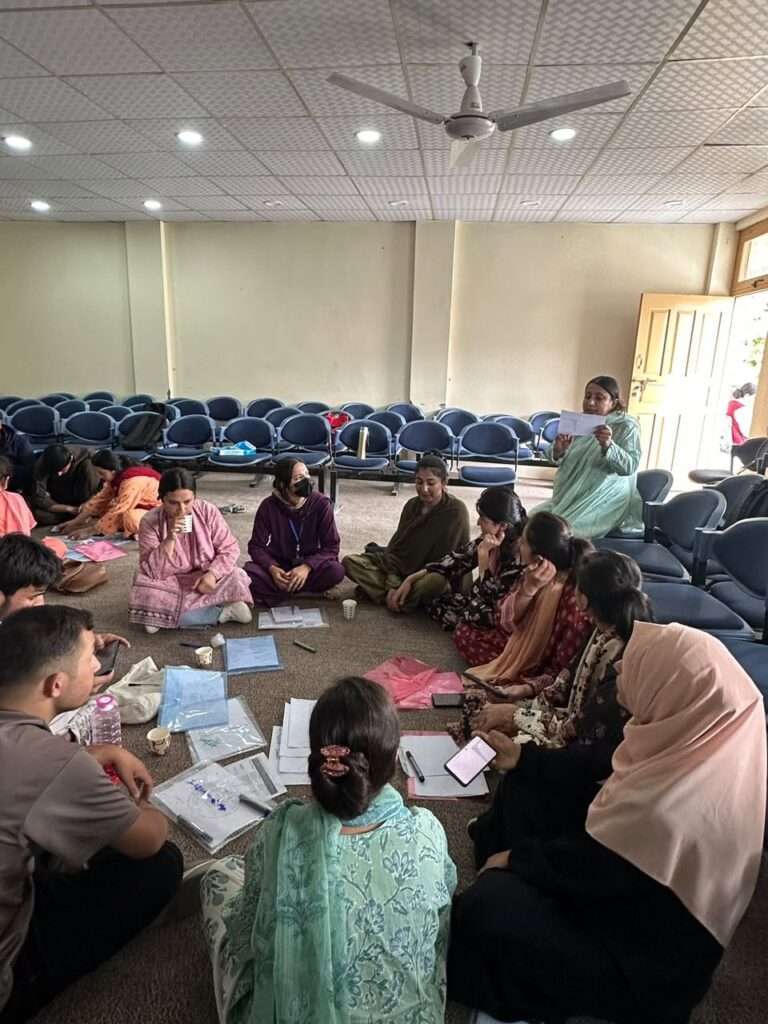
The workshop brought together 33 university students, who participated in hands-on learning sessions focused on communication, leadership, teamwork, critical thinking, problem-solving, workplace ethics, and career readiness. Through group discussions, practical exercises, role-playing activities, and collaborative projects, participants developed the confidence and interpersonal skills needed to thrive in today’s dynamic professional environment.
The project reflects the shared commitment of the U.S. Mission to Pakistan and PUAN to empower youth through education, leadership development, and workforce preparedness while supporting Pakistan’s growing digital economy and entrepreneurial ecosystem.
Dr. Aftab Ahmed Khan brings extensive international academic and professional experience to the initiative. A Fulbright Scholar, he completed his postdoctoral research at the University of Kansas, earned his PhD from the Technical University of Munich, and his MSc from the Technical University of Berlin. Throughout his career, he has led numerous national and international research projects in artificial intelligence, geoinformatics, climate change, disaster risk management, digital transformation, and environmental sustainability. As Director of SPDCE at KIU, he continues to champion professional development programs that prepare students and professionals with future-ready skills in emerging technologies.
Speaking about the importance of the initiative, Dr. Khan emphasized that technical knowledge alone is no longer sufficient in today’s competitive job market. Success in today’s workforce depends not only on academic qualifications but also on strong communication, leadership, adaptability, and teamwork. Through this initiative, we aim to help young people in Gilgit-Baltistan develop the confidence and professional competencies they need to seize emerging opportunities in technology, entrepreneurship, and the global economy, he marked.
Participants highly appreciated the practical nature of the workshop and the opportunity to learn through interactive activities rather than traditional classroom instruction. Many shared that the training strengthened their confidence, improved their communication skills, and provided valuable insights into workplace expectations and career planning.The initiative also engages members of the Pakistan-U.S. Alumni Network, reinforcing the role of exchange alumni in promoting education, innovation, and community development throughout Pakistan.
Through initiatives like NextGen GB, PUAN alumni continue to translate their international exchange experiences into meaningful local impact, helping young Pakistanis build the skills, confidence, and leadership needed to contribute to economic growth, technological innovation, and stronger U.S.-Pakistan people-to-people partnerships.